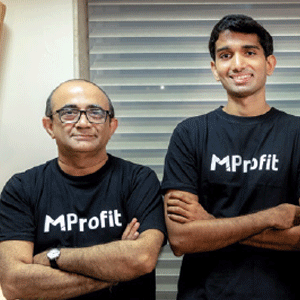
Pallav Bhatt, Chief Technology Officer, Ashin Shah, Chief Product Officer, MProfit Software
For affluent investors and family offices, portfolio complexity is no longer defined simply by the number of assets they own. It is also defined by where that information sits. Multiple brokers, wealth managers, banks and investment platforms generate a steady stream of contract notes, statements, tax documents and reports, leaving investors with fragmented data that can be difficult to reconcile.
As portfolios expand across equities, fixed income, PMSs, AIFs and other instruments, the ability to consolidate this information accurately is becoming as important as the investments themselves.
This is the problem MProfit Software has spent the past 17 years solving. Founded in 2009, the company has built a technology platform that brings disparate investment information into a consolidated wealth-management environment for HNIs, ultra-HNIs and family offices. Today, more than 1,300 HNI and family-office clients use MProfit, reflecting the relevance of a platform built around a deceptively simple proposition: investors should not have to manually piece together their own financial picture.
 Solving a Problem the Founders Faced Themselves
MProfit was not born from an attempt to manufacture a fintech opportunity. It emerged from a problem its founders were personally experiencing. Working with multiple wealth managers and brokers meant receiving individual contract notes, brokerage statements, fixed-deposit receipts and other financial documents, often as separate PDFs arriving through email. The obvious question was whether technology could take these fragmented electronic records and automatically bring them into a single wealth-tracking system. That became the foundation of MProfit.
What followed was deliberately gradual. Early traction was slow, but the company's location in Mumbai's Nariman Point—home to a significant concentration of family offices—created an unexpected advantage. Prospective users who discovered MProfit online would often want to meet the team before handing over sensitive financial information. Those conversations became a source of both customer acquisition and product development.
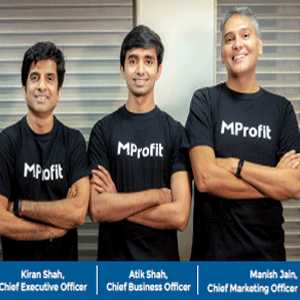
“MProfit listened to the problems customers were facing, incorporated relevant requirements into its platform and steadily developed its reputation. The result was not growth built around aggressive promises, but a technology business that earned confidence one customer problem at a time”, shares Manish Jain, Co- Founder.
Accuracy Is a Product Principle, Not a Feature
For Manish Jain, Co-Founder of MProfit, the company's technology philosophy begins with an uncompromising principle: accuracy comes before speed. This distinction matters because MProfit is dealing with financial data where small inaccuracies can have significant consequences. Capital-gains calculations, portfolio valuations and investment-performance information are not areas where a 99-percent accuracy threshold is sufficient.
Consequently, the company has resisted the pressure to implement every requirement as quickly as possible if doing so could compromise accuracy. Its product-development philosophy also follows an 80-20 principle. Customer requests are evaluated not simply on the importance they hold for one individual user, but on whether the underlying problem is relevant to a broader segment of customers.
This has allowed MProfit to remain customer-driven without becoming customer-fragmented. A highly specific requirement may enter the roadmap, but features with broader applicability receive greater priority.
From Desktop Software to an Always-Available Wealth Platform
One of MProfit's more significant transitions has been its movement from desktop-based software to cloud and mobile access. When the company began, keeping financial data on a local desktop was reassuring to many users. Security was closely associated with keeping information physically within an office. As digital banking, cloud applications and mobile computing became mainstream, however, expectations changed. Investors wanted their wealth information available while travelling, working remotely or meeting advisors outside the office.
MProfit's technology reads different electronic file formats and automatically aggregates the information, reducing the operational burden involved in maintaining a consolidated portfolio
Pallav Bhatt, Chief Technology Officer, Ashin Shah, Chief Product Officer
MProfit responded by gradually demonstrating the value of its web platform and mobile applications. Today, according to Manish Jain, around 90-95 percent of its clients use the web interface, while desktop usage has become far less significant. This transition illustrates a broader change in wealth management. “Technology is no longer merely being used to digitise existing processes; it is changing how financial information is consumed. Instead of waiting for a periodic report from a wealth manager, investors can increasingly access consolidated information in real time”, adds Manish Jain.
That also changes the relationship between technology and advisors. Jain does not see AI eliminating relationship managers. Instead, he believes better technology will make both sides more informed. Much as internet search has made patients more knowledgeable without eliminating doctors, AI and digital wealth tools can enable investors to enter conversations with their wealth managers better prepared.
Customer-Led Innovation Meets AI
MProfit's next chapter is being shaped by this convergence of customer demand, automation and artificial intelligence. Interestingly, the company is not pursuing AI simply because it is fashionable. Some of its recent AI initiatives emerged directly from customers asking how technologies such as ChatGPT and Claude could be connected with their investment information.
MProfit subsequently integrated these capabilities using MCP, while continuing to develop new features such as Investment Policy Statement (IPS) tracking. “The company's roadmap therefore follows a hybrid model: a clear internal view of where wealth technology is heading, combined with a strong willingness to let customers determine which problems deserve attention next. Jain estimates that around 80 percent of new MProfit features are driven directly by customer requirements”, says Manish Jain.
With a team of approximately 130 employees and a customer base of more than 1,300 HNIs and family offices, MProfit is entering its next phase from a position built less on financial-product distribution and more on financial-data intelligence. As India's affluent investor base adopts more asset classes, more advisors and increasingly digital ways of managing wealth, the challenge will not simply be finding more investment opportunities. It will be making sense of everything already owned.