The bank has implemented Core Banking Systems, alongside UPI, IMPS, and AEPS services, to deliver faster, more reliable transactions to customers
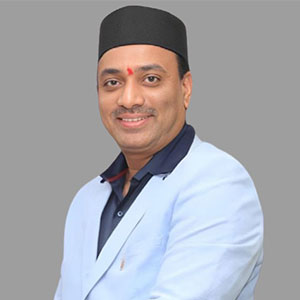
Subhash Kashinathrao Joshi, Chairman

In Beed, where access to finance once depended on distance and privilege, a cooperative movement took root nearly forty years ago with a radical premise: banking should be as local, personal, and transparent as the relationships it serves.
That philosophy became the foundation of Poornawadi Nagrik Sahakari Bank, an institution that has grown from a single branch serving the overlooked to a 25-branch network driving inclusion across Maharashtra.
Today, as digital adoption reshapes the financial fabric of India, Poornawadi Bank is consciously steering it, guided by a belief that technology must amplify trust, not replace it.
The bank’s story begins with the vision of Dr V. R. Parnerkar, an advocate and economist who, in 1985, established a financial institution in one of Maharashtra’s least developed regions.
His goal was to assist the needy through self-reliance and education by offering affordable credit, transparent governance, and community-rooted decision-making.
That legacy, carried forward by successive generations of leadership, has transformed into a living ethos of people-first banking, where economic empowerment remains inseparable from financial discipline.
A Phygital Model
For cooperative banks, the current market environment is a complex test of endurance and innovation. Clients, especially MSMEs, face regulatory rigidity, limited capital access, and rising competition from commercial and digital-first institutions.
However, the greater concern lies in continuity: how to sustain the intimacy and flexibility that once defined local banking, within an ecosystem driven by digital efficiency.
Poornawadi Nagrik Sahakari Bank approaches this as a design challenge. An integrated blend of physical branches and digital platforms (phygital model) ensures accessibility without compromising human connection.
The bank has implemented Core Banking Systems, alongside UPI, IMPS, and AEPS services, to deliver faster, more reliable transactions to customers in both urban and semi-urban locations. This combination allows a farmer in Beed and a trader in Aurangabad to experience the same level of service sophistication as a customer in Mumbai.
The bank has implemented Core Banking Systems, alongside UPI, IMPS, and AEPS services, to deliver faster, more reliable transactions to customersSubhash Kashinathrao Joshi, Chairman
Under the leadership of Chairman Dr Subhash Joshi and Vice Chairman Dr Laxmikant Vishnu Parnerkar, the bank continues to evolve its digital infrastructure and compliance frameworks to meet the Reserve Bank of India’s regulatory standards. With total business exceeding ₹1,400 crore, deposits nearing ₹900 crore, and advances over ₹500 crore, its financial performance underscores a rare balance of growth and prudence.
“We registered a net profit of ₹8.76 crore, maintained a Net NPA of 0.60 percent, and achieved a Capital Adequacy Ratio (CRAR) of 13.87 percent”, says Dr Laxmikant Vishnupant Parnerkar, Vice Chairman, Poornawadi Nagrik Sahakari Bank.
In addition, the bank’s A-grade RBI audit rating year after year reinforces that performance is engineered through strong governance and rigorous oversight. With a team trained in technology, risk management, and compliance, Poornawadi Bank sustains operational consistency that many cooperative peers struggle to match.
Personalized Banking in the Age of Automation
Where many financial institutions chase digital transformation as an end in itself, Poornawadi Nagrik Sahakari Bank treats technology as a means to an older, subtler goal: relationship preservation. Its client engagement model is built on proximity and personalization, understanding each borrower’s story, risk profile, and aspirations.
The bank’s portfolio, spanning personal, home, vehicle, MSME, microfinance, and gold loans, is structured around real-world needs, not algorithmic assumptions.
At the bank, decisions are made by professionals who understand local realities and regulatory nuances. The IT-qualified leadership brings a techno-commercial background to operational management, accelerating the bank’s modernization efforts without diluting its cooperative spirit.
Regular training programs keep staff aligned with RBI regulations, cybersecurity standards, and fintech innovations, ensuring that technological confidence translates directly into customer trust.
For clients, assistance is accessible through branches, helplines, and digital interfaces, each designed to deliver prompt responses and maintain service continuity.
This structure is more than a transactional channel and acts as a bridge of reassurance to reinforce the bank’s core promise of reliability and care. In its customer relationships, trust is an operational principle.
Transparency in rates, clear communication on terms, and proactive after-service engagement have helped the bank sustain loyalty over decades.
Sustaining Growth with Ethics & Innovation
“We aim to become a scheduled cooperative bank with a business mix of ₹2,025 crore, zero non-performing assets, and fully digital onboarding by 2025”, says Dr Parnerkar. It includes branch expansion into new semi-urban regions, introduction of green and solar loan products, and enhanced grievance redressal systems for improved customer satisfaction.
Four decades since its founding, Poornawadi Nagrik Sahakari Bank stands as a quiet but determined reminder that cooperative banking, when guided by intellect and integrity, can still outperform scale with sincerity.
The idea that financial inclusion is a social instrument, not a marketing slogan, remains embedded in its DNA. It does not aim to dominate markets but to dignify them: one trusted relationship, one transparent transaction, and one community at a time.