The bank’s process includes on boarding business correspondents in all villages of Sangli District
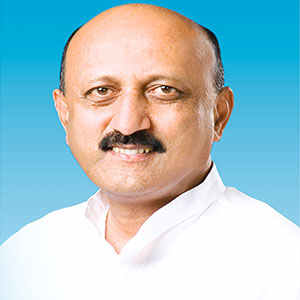
Mansingrao Fattesingrao, Chairman

Rural financial inclusion faces numerous challenges, including a lack of financial literacy, inadequate infrastructure, and limited access to digital and banking services. Moreover, in remote areas, many people lack access to informal sources of credit or financing due to unawareness about the banking facilities and distrust of formal sources.
In addition, there are numerous prospects in the rural areas of Sangli District for small businesses to benefit the rural livelihoods that are primarily based in rural areas to convene the rural economy.
Sangli District Central Cooperative arranges a community gathering in all villages, which seeks to connect rural communities and poorer families with the bank and promote its various products for rural people, to encourage new account openings.
The bank’s process includes on boarding business correspondents in all villages of Sangli District. These business correspondents expect that they will make small payments for rural poor people’s funds or underserved populations such as beneficiaries for Sharavan Bal Yojana, Sanjay Gandhi Niradhar Yojana, Ladaki Bahin and Kisan Sanman. Additionally, the bank will also be expected to do deposits for the rural people.
The bank has initiated legal action under various laws, which includes Section 101 of the MCS Act, 1960, and the SARFAESI Act, 2002. Furthermore, filed suits in the Cooperative Court, DRT, DRAT, and in NCLT, as well as against the legal heirs or spouses of the relevant parties.
In addition to the above legal proceedings, the bank offers One-Time Settlement (OTS), as well as Compromise Settlement Schemes, for the rural people.
The bank’s process includes on boarding business correspondents in all villages of Sangli DistrictMansingrao Fattesingrao, Chairman
Comprehensive Loan Solutions for Rural Development
Sangli District Central Cooperative offers a variety of loan options for the residents of Sangli District, and that can be categorized broadly into 2 categories: Agricultural and Non-agricultural loans. In agriculture, the bank offers a variety of loans like crop Loan, M.T. Loan for allied activities like rearing of cows, buffaloes, sheep, goats, and poultry.
In this category, there are dug wells, electric motor loan, pipe line loan, loans for the purchase of land, education loans, and loans for daughter’s marriage, housing loan, vehicle loan, and commercial vehicle loan. Furthermore, the bank provides dedicated staff to offer services to the rural poor, with personal customer interactions.
In the Non-agricultural category, consisting of provision for loans to sugar factories, Loans to small scale business for erection and working capital, loans to salary earners, gold loans, vehicle loans, housing loans, loans against property, and all backward corporations.
Besides, there is financial assistance under various Government Schemes, PMFME, CMEGP, AIF, and others. Moreover, the bank also provides credit support to Self Help Groups (SHGs) and Jointly Liable Groups (JLGs) for self-employment and community development.
Remarkable Growth with Strong Financial Stability
The bank showcases a solid financial health with a net worth of ₹741.57 Cr and ₹1,073 Cr of total reserves. The total business is ₹15,981,40 Cr, backed by deposits of ₹8,892 Cr and advances of ₹7,088 Cr.
The bank’s asset quality is good with a Gross NPA of 7.53 percent. The Capital to Risk-Weighted Assets Ratio (CRAR) is 10.60 percent, which indicates adequate capital adequacy.
From the productivity perspective, the business per employee is ₹14.42 Cr, indicating good operational efficiency. The bank also achieved a gross profit of Rs 186.00 Cr and a net profit of Rs 38.00 Cr, indicating an overall consistent financial performance for that year.
Over the past four years, total growth has proven to be commendable for the bank. The bank has had a total growth in deposits of 38 percent, with loans increasing by 33 percent, reflecting strong growth in operations. Reserves have increased by 79 percent, and own funds have increased by 68 percent, showing a healthy capital base.
Gross profit for the bank has grown by 46 percent, with net profit growing by 26 percent, indicating consistent profitability. Total business has increased by 36 percent. Furthermore, Net NPA has declined by 100 percent, demonstrating significant improvement in asset quality and credit management.
Centenary Vision for Expansion and Rural Empowerment
The bank will celebrate its centennial year, 2026-27, marking 100 years since its inception on 28 March 1927. In the year of its centenary, the bank has ambitious targets for a total deposit collection of ₹10,000 Cr and loans of ₹8,500 Cr by keeping gross NPAs under 5 percent.
In concrete support of agriculture, the bank is going to implement a number of development services such as e-crop verification, e-land verification, and fully computerizing all agricultural societies and integrating them with the bank network.
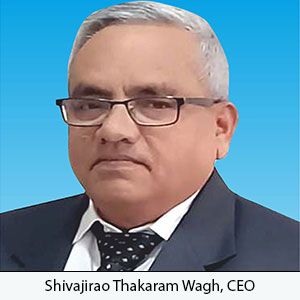
“We have prepared an action plan for three years, which helps to expand financial growth and strengthen the financial parameters,” says Wagh, CEO of Sangli District Central Cooperative.
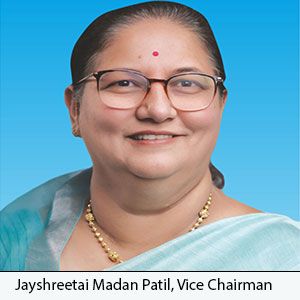
The bank is licensed by the RBI under license number RPCD (MRO) 1258/18/01/1938/2011-12 dated 20 December 2011. The Board of Directors comprises Ex-MLA Mansingh Fattesingrao Naik (Chairman), and Jaishreetai Madan Patil (Vice Chairman).
Going forward, the bank plans to expand the branch network, and got approval from the RBI for the opening of the new 10 Branches in rural areas. The proposal for the opening of an additional 10 branches is under consideration. For new client acquisition, we will also be appointing business correspondents in all villages of the District.