Mathew Financials plans to deepen its technology enabled financial planning capabilities while retaining the personal engagement that has defined the practice over the past 24 years
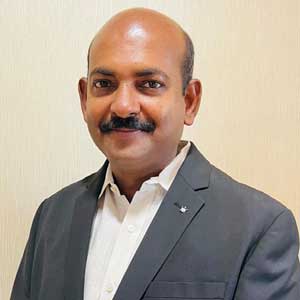
Mathew Joseph, Director


India’s investment ecosystem is undergoing a notable shift as investors increasingly look beyond conventional savings instruments towards more structured, market-linked avenues for longterm wealth creation. Mutual funds, supported by the growing adoption of Systematic Investment Plans (SIPs), have emerged as a preferred way to invest consistently and participate in the capital markets. However, the abundance of investment choices, digital platforms and financial content has introduced a different challenge: identifying opportunities that align with an investor’s goals, risk profile and time horizon rather than simply following short-term performance. Against this backdrop, Mathew Financials, a mutual fund investment service provider with 24 years of experience, has positioned its approach around a clear philosophy - investment decisions should be driven by the investor’s financial objectives, not by the product alone.
Putting Financial Goals Before Financial Products
At the centre of Mathew Financials’ approach is the belief that investment outcomes are shaped not simply by selecting a fund, but by understanding why the money is being invested in the first place. Rather than beginning client conversations with fund fact sheets or recent returns, the firm first examines financial goals, time horizons and an investor’s actual capacity to withstand market volatility.
For Mathew Joseph, Director of Mathew Financials, this philosophy has developed over more than two decades of working closely with individuals and families. His professional journey includes the LUTCF qualification, 17 consecutive years of Million Dollar Round Table (MDRT) membership, one Court of the Table (COT) qualification and five Top of the Table (TOT) qualifications, including requalification in 2025.
The experience has reinforced a critical distinction in his advisory philosophy: a suitable investment is not necessarily the product generating the highest return, but the one aligned with the investor’s objective.
That can sometimes mean advising against an aggressive investment even when the product itself has strong potential. A small-cap SIP, for instance, may have a place in a long-term portfolio, but could be unsuitable for an investor preparing for a home down payment three years away. Such conversations reflect the firm’s emphasis on suitability over market enthusiasm.
Turning Financial Aspirations into Structured Plans
Goal-based planning is also central to how Mathew Financials approaches SIPs, retirement planning, child-education requirements and long-term wealth accumulation. Its planning and estimation tools are designed to translate broad concerns such as “Will I have enough for retirement?” into defined financial targets with specific timelines.
This distinction matters because two investors with apparently similar investment amounts may require very different portfolios. Funding a child’s higher education 15 years from now, for example, carries different considerations from building a retirement corpus over the same period.
Once the required corpus, investment period and risk parameters are established, investment selection becomes part of a larger financial strategy rather than an isolated decision.
“The firm also seeks to moderate what could be described as ‘goal inflation’ — the tendency to pursue increasingly ambitious return targets simply because higher-return products are available. Mathew Financials instead focuses on balancing financial aspirations with realistic risk tolerance and risk capacity”, speaks Mathew Joseph.
This planning-led philosophy has also shaped its client relationships. Rather than engaging investors primarily when markets become volatile, the firm places emphasis on periodic reviews, check-ins and ongoing conversations. The objective is to build sufficient understanding and trust during normal market conditions so that investors are better equipped to avoid emotionally driven decisions during corrections.
Mathew Financials plans to deepen its technology enabled financial planning capabilities while retaining the personal engagement that has defined the practice over the past 24 yearsMathew Joseph, Director
Advisory in an Age of Information Overload
Digital platforms have dramatically widened access to financial information. Investors can now compare funds, monitor portfolios and encounter market opinions almost instantly. But greater information availability does not automatically translate into better financial judgment.
Mathew Financials therefore sees the modern advisor’s role increasingly as one of interpretation rather than information gatekeeping. Instead of competing with the abundance of online content, the firm seeks to help clients determine whether a market headline, popular fund or investment trend has any relevance to their individual financial plan.
Continuous professional development supports this approach. Mathew has participated in a leadership programme at ISB Hyderabad and completed the “Lessons of Excellence” executive programme at IIM Ahmedabad. These experiences complement a practice philosophy centred on disciplined decisionmaking particularly when investors are confronted by market noise or short-term performance narratives. For the firm, technology is most valuable when it strengthens rather than replaces meaningful advisory relationships.
Combining Personal Advice with Digital Scale
Looking ahead, Mathew Financials plans to deepen its technology-enabled financial-planning capabilities while retaining the personal engagement that has defined the practice over the past 24 years. “The firm envisions an integrated digital experience bringing together risk profiling, goal planning, portfolio construction, fund research, investment proposals, portfolio review and optimisation, and digital execution. Such capabilities can provide clients with greater visibility into diversification, portfolio overlap, performance, risk and suitability while helping ensure that investments remain aligned with changing goals and timelines”, shares Mathew Joseph.
Automation in analytics, portfolio monitoring, goal tracking and research can simultaneously allow advisors to devote more time to conversations where human judgment matters most.
For Mathew Financials, therefore, the next phase is not about replacing a relationship-led advisory model with technology. It is about making that model more structured, transparent and scalable. Having spent more than two decades serving investors, the firm’s direction remains anchored in the same longterm proposition: combining disciplined financial planning, informed judgment and technology to help families make investment decisions measured in decades rather than market quarters.