
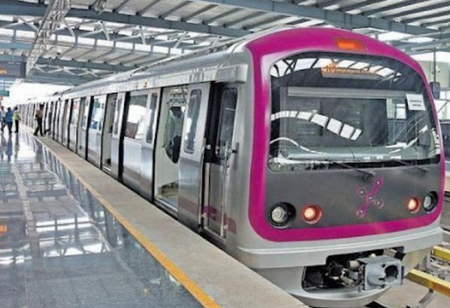
The dramatic increase in Namma Metro fares has sparked public outrage, with daily commuters describing it as a setback for affordable public transportation. With ticket prices increasing by 50-90%, many passengers are reconsidering their daily metro commute and opting for personal vehicles.
Bengaluru's Namma Metro, spanning 77 kilometers, is India's second-longest metro network, transporting nearly 8-9 lakh passengers per day. With the upcoming Electronic City metro line, ridership is expected to exceed 12 lakh. However, the latest fare revision has sparked widespread criticism, with commuters believing it contradicts efforts to promote public transportation and reduce traffic congestion.
Many passengers argue that the increase is more than 50%, as officially stated, and in some cases exceeds 90%.
- Techie Rajesh, who travels between Kadugodi and Baiyappanahalli, stated that his previous ticket cost ₹33. I now have to pay ₹60. That's almost a 90% increase!"
- A commuter, Sharath Gautam, took to social media platform 'X' and sarcastically remarked, "As a minister once said in the House, we pay taxes like the English but receive services like Somalia. This metro fare increase demonstrates that statement."
- Vijay S., another commuter, pointed out that the fare from Kundanahalli to M.G. Road was ₹37 and is now ₹70. "This is a step backward for public transportation."
- TVK Sanjay's fare from Sitaram Palya to Deepanjali Nagar increased by 60% from ₹57 to ₹90. "What justifies such a significant increase?"
With this price increase, Namma Metro is now the most expensive metro system in the country, surpassing fares in Delhi, Mumbai, Chennai, Kolkata, Hyderabad, Lucknow, Kochi, and Jaipur.
- Namma Metro charges ₹90 for a 25 km journey
- Delhi Metro costs ₹60 for 32 km
- Chennai Metro costs ₹50 for the longest route
- Kolkata Metro charges ₹25-30 for similar distances
The fare disparity has sparked public outrage, with many asking why Bengaluru's metro is more expensive than metros in Delhi and Kolkata, despite having a shorter network. Adding to commuter woes, Bengaluru Metro Rail Corporation Ltd (BMRCL) has discontinued discounts on QR-code tickets until February 8, further raising prices.
According to December 2024 data, nearly 25% of metro passengers used QR code tickets, with 46.6% relying on smart cards. The 5% smart card discount is still in effect, but passengers should be aware that it was reduced from 15% to 5% by 2020.
Other cities, such as Chennai and Kochi, provide a 20% discount on QR and WhatsApp tickets, making Bengaluru's move stand out negatively. Moreover, day pass prices have doubled, making it more expensive for tourists and occasional commuters:
One-day passes range from ₹150 to ₹300. Three-day passes range from ₹350 to ₹600. Five-day passes range from ₹550 to ₹800. With metro fares skyrocketing, more people are expected to return to personal vehicles, exacerbating Bengaluru's already notorious traffic congestion. Commuters argue that, rather than making public transportation more affordable and accessible, the fare increase discourages its use. As passenger dissatisfaction grows, many are urging authorities to reconsider their pricing strategy in order to ensure long-term urban mobility in India's technology hub.