The IBC Reforms 2026 represent a major change in the insolvency framework in India, with the goal of resolving many delays that had plagued the process and enhancing the efficiency of insolvency resolution. This new amendment bill sets time-bound mechanisms, creditor’s rights and structural reforms that ensure effective legislation of the Insolvency and Bankruptcy Code (IBC). With improved asset quality and decline in NPA in banking sector, India’s financial stability is expected to be strengthened further with these reforms.
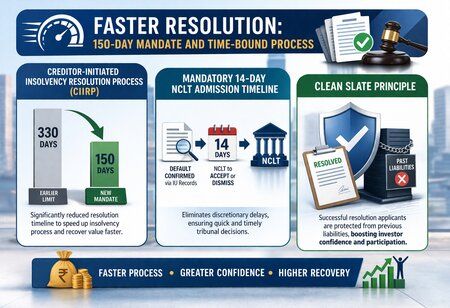
Faster Resolution: 150-Day Mandate and Time-Bound Process
A key highlight of the IBC Reforms 2026 is the Creditor-Initiated Insolvency Resolution Process (CIIRP), introduced with the new amendments whereby 150-day resolution timeline of resolution is mandated, a figure that is significantly lower than the earlier limit of 330 days.
This move will improve the delays associated with insolvency cases. Further, the amendment provides a mandatory 14-day admission timeline for the National Company Law Tribunal (NCLT). After a default has been confirmed through Information Utility (IU) records, the tribunal has to dismiss or accept the case within this period eliminating the discretionary delays.
The new amendment bill also formally recognizes the “Clean Slate” principle which guarantees that successful resolution applicants are not affected by previous liabilities. This is expected to bolster investor confidence and increase investors participation in stressed asset resolution.