
.jpg "Will India Retaliate With a 25 Percent US Tariff USD 48 Bn at Stake")
17% vs 25%: How Much Does the Deal Rate Matter Against Rivals?
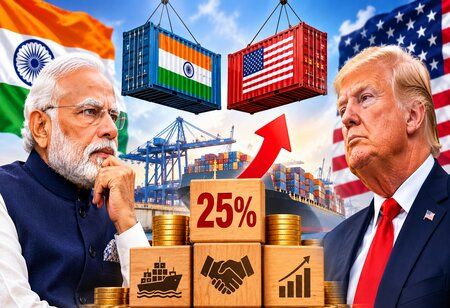
There is an eight-point difference between 25% and 17%. The margin in front of the opposition is much smaller. The proposed rates for Bangladesh, Cambodia, Indonesia, Malaysia and Thailand are up to 18%, and up to 20% in Singapore. Those are India's marginal edge – between one and three percentage points – as GTRI calls it.
This is because, the competitor gap is more important than the headline rate. Exporters of price-sensitive goods like textiles, leather and seafood may lose orders if India still maintains its 25 per cent rate, while rivals hover around the 18 per cent level. India (17%) is just a whisker ahead and quality, delivery and existing buyer relationships will be as important as the tariff.
What Would a Retaliatory Tariff Mean for India?
This section is analysis, not a forecast.
- Higher costs at home. A duty on US goods raises prices for Indian importers and consumers of whatever products it covers. India's imports from the US rose 26% to $32.33 billion in April–September 2026.
- Negotiation risk. The government says talks are progressing. Retaliation could complicate them, while exporters want certainty.
- Limited leverage. India's merchandise trade surplus with the US was $18.48 billion in April–September, down from $20.07 billion a year earlier. The US matters far more to India's exporters than India does to the US, and Axis Bank research puts India at about 3% of US imports.
- Possible upside. Goyal argues US traders would lobby their own government, and a visible response could strengthen India's hand at the table.
Retaliation is a decision for the government, not a trade body. So far, New Delhi has chosen negotiation.