
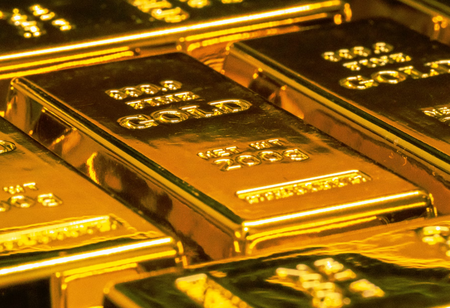
Customers have already left the market as the price of pure gold approaches the Rs 70,000 per 10 gram barrier. The price in Mumbai's Zaveri Bazaar has increased by about 10% in only one month, trading at about Rs 68,500 for 10 grams. Since prices have increased significantly in only one month, the Mumbai spot market has slid into a steep discount of $15–20 per ounce, or Rs 400–550 every 10 grams.
Even imports of gold, which were around 100 tons in February, dropped precipitously in March. According to industry estimates, imports were only 25 tons. Jewelers are keeping an eye on the demand for weddings as well as Akshaya Tritiya, which falls in the first week of May. Although the production of jewelry has been impacted, they are reportedly getting ready to satisfy demand in the event that the price of gold drops. Following increased monitoring during the election code of conduct, gold movement is also impacted.
"Marriage demand in India has been constant or may be slightly up in value terms," stated Bhargava Vaidya, a consultant for the bullion sector. However, demand has decreased in relation to quantity due to rising pricing. The demand pattern will continue at the present price point.
A decade ago, the price of gold was Rs 28,430 per 10 grams, up 141%, yielding an annual compound return of 9.2%. Market demand is steadily changing as a result of this high return. While acknowledging that consumers are now avoiding the market, Surendra Mehta, National Secretary of the Indian Bullion and Jewellers Association, stated that "the demand for jewelry has been gradually shifting to coins and bars and other gold investment avenues."
It is "attracting men over women" in a sense. Exchange-traded funds and sovereign gold bonds have offered gold investors a solid option, even though the overall demand for jewelry is still larger. When it comes to jewelry, low carat gold is chosen, and growing costs have an impact on amount demanded. Mehta, however, anticipates a domino effect from the record-high price in the future. "Demand will be affected by the high price, which means more people will view gold as an investment avenue and it will regain its status as a store of value." A guardian of money is someone who stores treasure.
Vaidya concurs, stating that investors "should have 10-15 per cent gold in their portfolio" and that gold is a store of value with price swings of 10–15%.
The next major event that drives up demand for gold is Akshaya Tritiya, which falls in the first week of May. Jewelers are getting ready to cut back on their inventory for Akshaya Tritiya. Prior to that, they want prices to level down. Insiders in the market predict that buyers could come back if gold prices on the global market drop back to about $2,100.
The impact of high pricing on jewelers is multifaceted. Under secrecy, a well-known jeweler said that their inventory costs had increased due to the estimated 300–400 tons of gold jewelry that they have in stock across their country's stores. A decade ago, this would have been 100 tons, and retail chains' store expansions are the cause of the huge inventory. The most popular jewelry kind up to this point has been 22-carat jewelry, however 18-carat jewelry is also an option. Jewelers may decide to switch from their 22-carat inventory to low-carat jewelry due to high costs, which will only drive up their expenses. Industry insiders stated that there may even be an increase in demand for 14-carat jewelry. For jewelers, Akshaya Tritiya demand would be essential in this situation.