
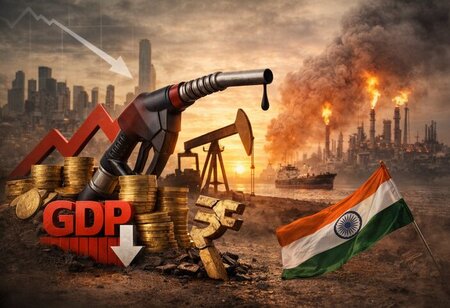
The India FY27 growth outlook is under pressure as West Asia oil crisis intensifies, with rising crude prices and geopolitical instability reshaping economic expectations. Analysts caution that the India FY27 growth could dampen consumption, elevate inflation, and strain India’s external balances.
Key Highlights
- India FY27 growth outlook weakens as West Asia oil crisis drives inflation and economic uncertainty higher.
- Rising crude oil prices threaten India’s growth, widening deficit and impacting consumption and investment trends.
Recent projections indicate that India’s GDP growth for FY27 may ease to around 6–6.5%, compared to earlier expectations exceeding 7%, as energy costs surge and economic uncertainty deepens.
India’s vulnerability stems from its heavy reliance on imported crude oil, which accounts for nearly 85–90% of its energy needs. The ongoing West Asia conflict has triggered a sharp spike in oil prices, increasing input costs across industries and pushing inflationary pressures higher. As a result, both consumer demand and corporate profitability are expected to come under stress.
Neelkanth Mishra, Chief Economist, Axis Bank stated, “A sustained surge in global energy prices could significantly disrupt India’s growth trajectory and balance of payments, given the country’s heavy dependence on oil imports.”
Also Read: Oil Impact on India Deepens as Crude Crosses $116, Markets Tumble
Economists estimate that growth forecasts have already been revised downward by 20–60 basis points, reflecting the cascading impact of elevated energy prices on trade, consumption, and investment.
Nilesh Shah. MD, Kotak Mahindra AMC noted, “Every 10% increase in oil prices can impact India’s inflation by about 20 basis points and shave off GDP growth, while also widening the current account deficit.”
Macro Pressures Build Across the Economy
The oil-driven shock is not limited to inflation alone. It is also expected to:
- Widen the current account deficit (CAD)
- Increase the overall import bill
- Put pressure on fiscal balances due to higher subsidies
ICRA estimates that India’s CAD could rise to 1.7% of GDP in FY27, up from around 1% currently, highlighting the growing external imbalance.
At the same time, global uncertainties and capital outflows are adding to currency pressures, with the rupee weakening amid rising energy costs and investor caution.
Economists highlight that inflation remains the primary transmission channel through which oil shocks impact growth. Higher input costs not only reduce export competitiveness but also erode household purchasing power, weakening demand.
While domestic demand and infrastructure spending continue to offer some support, the duration of the West Asia oil crisis will be crucial in determining the final growth trajectory. If oil prices remain elevated for an extended period, India’s growth could face further downward revisions.
The India FY27 growth outlook underscores the economy’s increasing exposure to global energy shocks. With inflation risks rising and fiscal space tightening, policymakers may need to strike a careful balance between stabilising growth and maintaining macroeconomic stability.