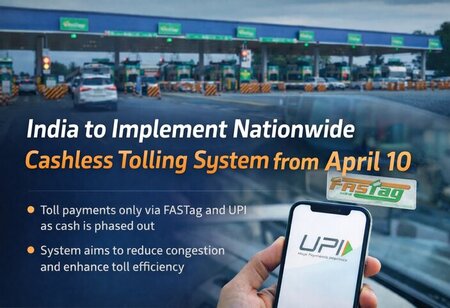
India is set to implement a nationwide cashless tolling system from April 10, marking a major shift in highway travel as the government moves to eliminate cash payments at toll plazas and adopt fully digital transactions. The initiative, led by the Ministry of Road Transport and Highways and the National Highways Authority of India (NHAI), aims to streamline toll collection, reduce congestion, and improve overall travel efficiency across national highways.
Key Highlights
- India launches nationwide cashless tolling system eliminating cash payments to reduce congestion and improve efficiency.
- FASTag becomes primary payment mode while UPI allowed at higher charges under nationwide cashless tolling system.
Under the new cashless tolling system, toll payments will be accepted only through digital modes such as FASTag and UPI, with FASTag remaining the primary method for seamless, automated deductions. Vehicles without a valid FASTag will still be able to pay via UPI but may incur a higher toll charge, making digital tag adoption essential for regular commuters.
The government’s move is expected to significantly reduce long queues at toll plazas, a persistent issue on busy highways, and enable faster vehicle movement by eliminating manual cash transactions. Authorities believe the transition will also enhance transparency, standardize toll operations, and minimize disputes at toll booths.
Also Read: RBI adds Metro Card Payments and Hassle-free FASTag Payments to the E-mandate List
Additionally, the cashless tolling system rollout will tighten rules around toll exemptions, discontinuing informal practices such as ID-based waivers for private vehicles. Only officially approved exemptions linked to digital systems will be permitted, further strengthening compliance and reducing misuse.
The shift to a fully digital tolling ecosystem is part of India’s broader push toward smart infrastructure and cashless payments, with over thousands of toll plazas expected to operate under this system. Officials have advised commuters to ensure their FASTag accounts are active and sufficiently funded to avoid disruptions once the new rules come into effect.