
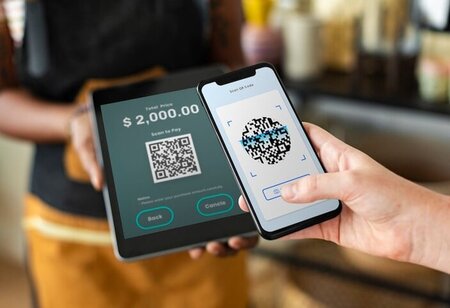
Mobile retailers across India will observe October 2 as ‘No UPI Day’, temporarily stopping UPI payments to protest the proposed 0.4% MDR (Merchant Discount Rate) on eligible merchant transactions. The countrywide campaign, organised by the All India Mobile Retailers Association (AIMRA), will coincide with the Gandhi Jayanti and show the problems in the extra cost involved in accepting digital payments.
Key highlights
- Mobile retailers will observe No UPI Day on October 2, protesting the proposed MDR on eligible merchant UPI transactions.
- AIMRA estimates the proposed charge could cost small retailers Rs 2,000 to Rs 12,000 monthly, depending on transaction volumes.
The protest is in anticipation of the new MDR coming into effect on October 15, 2026. Under this framework, there will be 0.4% MDR fee on the UPI transactions made by person-to-merchant (P2M) transactions with a transaction limit of Rs 2,000. Person-to-person transfers and specified small-value merchant payments will remain exempt.
Why Are Mobile Retailers Observing No UPI Day on October 2?
AIMRA has called for the one-day protest and no UPI day on October 2 to draw attention to the financial impact of the proposed MDR on mobile retailers. Participating dealers will refrain from accepting UPI payments and symbolically cover their UPI QR codes with black cloth.
AIMRA Vice President and Delhi-NCR President Tarvinder Singh said the campaign is intended to highlight retailers’ concerns about the additional cost of accepting digital payments. The association has also written to Finance Minister Nirmala Sitharaman, warning that the charge could put pressure on the earnings of smaller retailers.
What Is the New 0.4% UPI MDR Rule Starting October 15?
The Merchant Discount Rate is a fee associated with processing eligible merchant payments. Under the new framework, a 0.4% MDR will apply to qualifying UPI transactions above Rs 2,000 from October 15.
The framework includes exemptions for person-to-person transfers and specified small-value merchant payments. Small merchants with monthly UPI receipts of up to Rs 1 lakh will continue to be exempt, while the MDR on transactions of Rs 75,000 and above is capped at Rs 300 per transaction.
How Much Could the UPI MDR Cost Mobile Retailers?
AIMRA estimates that the proposed charge could increase monthly costs for mobile retailers, depending on their UPI transaction volumes. According to the association, a retailer processing Rs 5 lakh in monthly UPI transactions could face an additional cost of around Rs 2,000.
For retailers handling up to Rs 30 lakh in monthly UPI transactions, the estimated monthly impact could reach Rs 12,000. AIMRA has also estimated that the charge could impose a burden of approximately Rs 40 crore per month, or nearly Rs 500 crore annually, on small mobile retailers across India.
These figures are estimates provided by the association and reflect its concerns about the effect of the proposed charge on retailers’ earnings.
Will Customers Have to Pay Extra for UPI Transactions?
The proposed MDR on UPI is a merchant-side charge, and the government has said it should not be passed on to consumers. The Centre plans to ask the Indian Banks’ Association to conduct awareness campaigns and help ensure customers are not charged extra for eligible UPI payments.
The distinction is important for customers: the proposed fee applies to specified merchant transactions, not ordinary person-to-person UPI transfers.
Also Read: UPI MDR GST: NPCI Says Small Merchants Won't Face Extra Burden
What Is AIMRA Demanding From the Government?
AIMRA wants merchant UPI payments to continue under the existing zero-MDR structure. Singh said the protest should not be viewed as opposition to UPI or the government’s Digital India initiative.
The association argues that digital payments should remain affordable for retailers and that additional transaction costs could place pressure on smaller businesses.
UPI MDR Row: What Is the Supreme Court Case About?
A PIL filed by advocate Anjan Datta has also raised doubts on the proposed MDR. The petition says the levy was imposed with no proper safeguards, transparency and public consultation.
The plea was to be heard by the Supreme Court on Monday. A legal angle in the discussion of proposed charges is added in the case.
Who Receives the UPI MDR Collected From Merchants?
Under the proposed revenue-sharing arrangement, 40% of MDR collections will go to customers’ banks, 30% to payment gateways, 20% to the UPI app and the remaining 10% to the app’s sponsoring bank.
FM Sitharaman has said the government will not receive the collections. She clarified that MDR is not a tax, cess or surcharge and that the money will not go to the Consolidated Fund of India.
The October 2 campaign will therefore bring retailers’ concerns over the proposed fee into focus ahead of its scheduled implementation.