
As the PM Narendra Modi has advised businesses to adopt austerity measures and save energy consumption, the major private sector banks are slowly moving towards hybrid working modes. Several banks, such as HDFC Bank, IndusInd Bank and Yes Bank, have introduced and/or enhanced their flexible work-from-home (WFH) policies for certain sections of their workforce.
Key Highlights
- Private sector banks adopt hybrid work models to support fuel-saving measures and operational efficiency initiatives.
- HDFC, Yes and IndusInd expand flexible policies following PM Modi’s austerity guidance.
The decision follows the government's push for fuel economy and foreign exchange savings amidst the impact of fresh currency pressures and high crude oil prices in India, which has been hit by the supply disruptions in West Asia.
In the last week, the Ministry of Finance advised various government banks, insurance companies and financial institutions to take "austerity steps", such as travel restrictions on non-essential travel, more virtual meetings and accelerating the conversion of petrol and diesel vehicles to electric vehicles as much as possible.
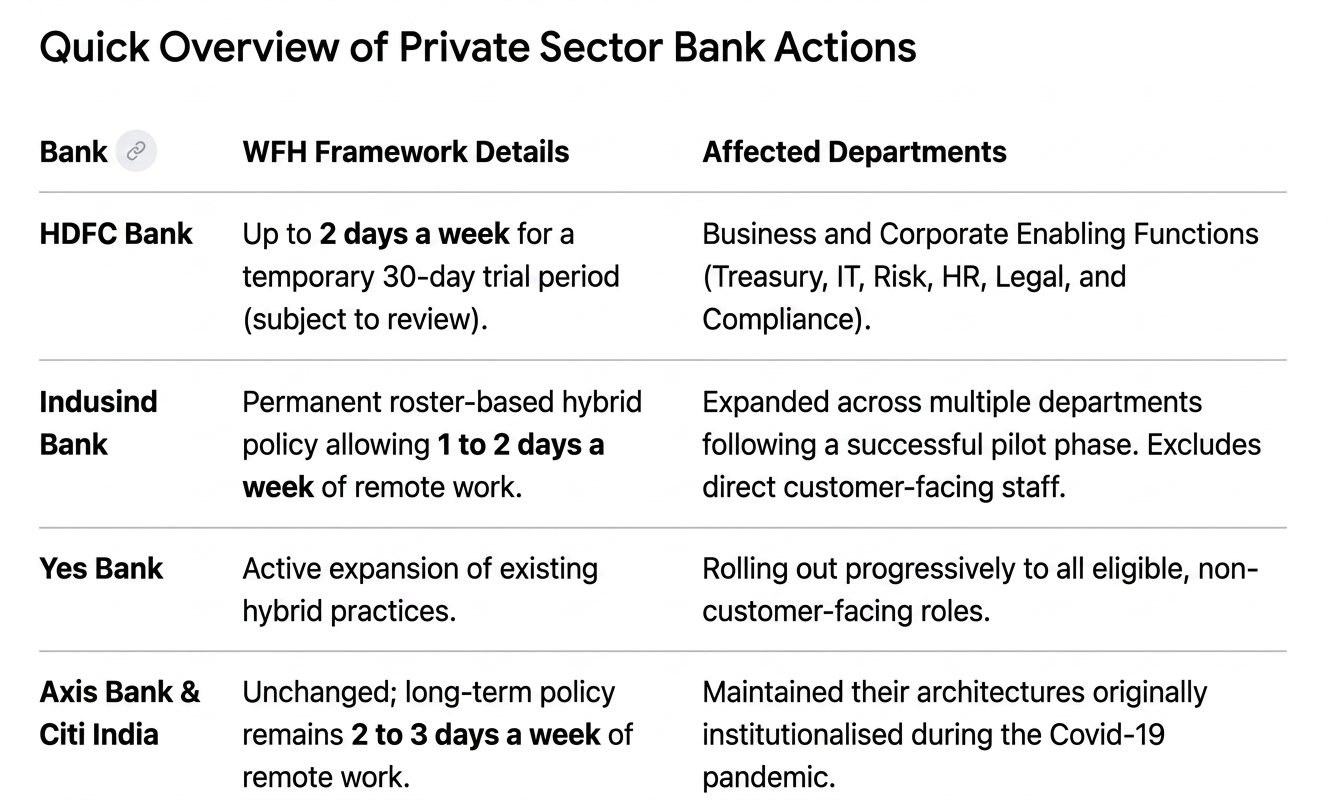
HDFC Bank Introduces Temporary Hybrid Policy
The India's biggest private lender, HDFC Bank, has launched a two day work from home policy for staff in business-enabling and corporate-enabling roles for an initial period of 30 days with a possibility of extension.
All customer facing branches and service points will operate as usual, with the exception of the policy which will be applied to back-end and operational teams.
This includes treasury, digital banking, IT services, finance, legal, compliance and HR teams.
YES Bank Extends Hybrid Work Flexibility
YES Bank has also aligned with the sector-wide shift toward flexible work arrangements by continuing its “Work from Anywhere” framework for identified non-customer-facing employees, allowing select teams to operate remotely while ensuring uninterrupted branch and customer service operations. The bank’s hybrid model is aimed at improving operational efficiency, reducing commute-related energy consumption, and supporting the government’s broader resource-conservation push amid rising global crude oil uncertainty.
IndusInd and Others Continue Flexible Work
The hybrid model was already in place in IndusInd Bank with non-customer-facing staff earlier this year after the banks successfully tested it internally. Flexible options were reported to provide more favorable work-life balance, less commute stress, and increased productivity among employees.
In a similar pattern, since FY21, Axis Bank has been operating a hybrid model for non-branch positions that involves working from the office on designated days of the week and working remotely on the rest of the days.
Foreign banks, including Citibank and global financial institutions operating in India, have largely continued post-pandemic hybrid frameworks with minor operational adjustments.
Also Read: Modi Urges Fuel Savings, Gold Freeze Amid Global Crisis Fears
Energy Crisis Reshapes Corporate Operations
The broader push reflects India Inc’s growing response to concerns over global energy volatility.
Prime Minister Modi recently urged businesses to adopt fuel-saving operational practices, including remote work, staggered shifts, virtual meetings, and sustainable transport usage to reduce dependence on imported fuel.
The call comes as India’s crude import bill has surged sharply due to elevated oil prices and supply concerns surrounding the Strait of Hormuz, raising fears of imported inflation and widening fiscal pressures.