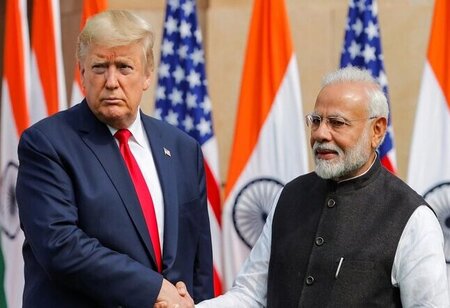
After months of intense negotiations and escalating trade tensions, the United States and India have agreed on a landmark trade understanding that significantly eases tariff barriers between the two countries. U.S. President Donald Trump announced that Washington will reduce its reciprocal tariff on Indian imports to 18 percent, down from as high as 50 percent, following talks with Indian Prime Minister Narendra Modi.
Key Highlights
- The United States has reduced tariffs on Indian goods to 18 percent, rolling back earlier punitive duties linked to India’s Russian oil imports.
- The move follows high-level negotiations and signals a reset in US-India trade relations aimed at boosting bilateral commerce.
The dramatic shift comes after New Delhi committed to phasing out purchases of Russian crude oil, a key sticking point in earlier discussions that had led to punitive duties. Under the new arrangement, the additional 25 percent tariff linked to India’s Russian oil imports has been dropped, leaving only the reduced 18 per cent reciprocal rate on eligible Indian products entering the U.S. market.
Trump framed the agreement as a reflection of close personal diplomacy, saying the tariff cut was based on “friendship and respect” for Modi. Reports indicate that India will also eliminate tariffs and non-tariff barriers on U.S. goods and has pledged to significantly increase purchases of American energy, agricultural, technology and industrial products — part of a proposed $500 billion trade package that could reshape bilateral economic ties.
Indian exports, which had faced steep levies, are expected to become more competitive in the U.S. market under the new tariff structure. Prime Minister Modi welcomed the reduction, calling it a positive step for bilateral trade that can benefit businesses and consumers in both democracies.
Also Read: EU Firms Bullish on India, EU-India FTA as Key Growth Driver: FEBI
Analysts say the tariff reset could also help de-escalate broader geopolitical trade tensions, particularly after India finalised a separate free trade agreement with the European Union. However, details on implementation and sector-specific commitments remain to be finalised.