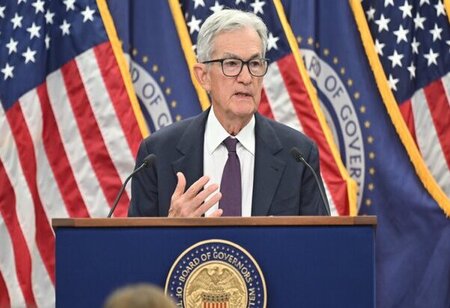
The U.S. Federal Reserve has decided to keep its key interest rates unchanged, pausing after several previous rate cuts and maintaining the benchmark federal funds rate in the range of 3.50 %–3.75 %—a level unchanged since mid-2025. This decision marks a cautious shift in U.S. monetary policy as the central bank noted that while economic growth remains solid, inflation is still elevated, prompting policymakers to adopt a “wait and see” stance instead of immediate further easing.
Key Highlights
- US Federal Reserve keeps interest rates unchanged, prompting cautious sentiment across global and Indian equity markets.
- Indian markets expected to track global cues as stable US rates delay capital flow tailwinds.
For Indian markets, this Fed posture is an important macroeconomic signal that investors are closely monitoring for potential spillover effects on global capital flows and risk sentiment. Early indicators such as the GIFT Nifty showed a slight negative bias, suggesting Indian markets could open flat or mildly subdued following the Fed’s announcement. Asian benchmarks also reflected broader pressure with indices like the KOSPI, ASX 200, and Hang Seng trading lower, pointing to mixed global investor reaction.
Typically, a rate cut by the Fed can lead to cheaper global liquidity and a weaker U.S. dollar, which in turn may attract foreign capital into emerging markets such as India and support assets like equities and bonds. However, with the Fed holding rates steady, these short-term tailwinds may take longer to materialize. A stable dollar could also temper gains in the Indian rupee, which has been hovering near multi-year lows against the greenback.
Also Read: How US Fed Rate Cuts Are Reshaping Indian Asset Classes
Analysts noted that with the Fed’s future moves still uncertain, market participants are taking a cautious approach, watching not just U.S. monetary policy but also how global liquidity conditions and inflation dynamics evolve. The outlook for Indian markets will therefore depend on a complex interplay of global monetary trends, domestic economic data, and investor risk appetite in the weeks ahead.