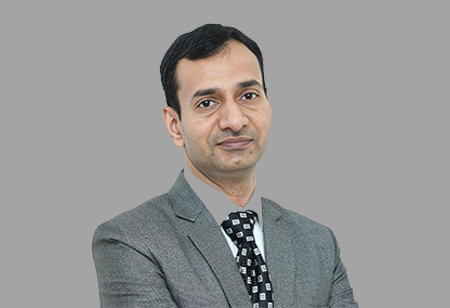
In an interaction with Thiruamuthan, Senior Correspondent at Finance Outlook India, Amit Gupta, Chief Financial Officer at Hindustan Zinc, shares how the mining industry is redefining long-term value creation through disciplined capital allocation, operational excellence, technology adoption, and sustainable business practices.
Drawing on more than two decades of finance leadership across mining, metals, aluminium, power, oil & gas, and manufacturing, he discusses how organizations are balancing growth with financial discipline, optimizing existing assets, strengthening cash flow resilience, and embedding sustainability into strategic decision-making amid evolving market dynamics.
Amit is a seasoned business leader with extensive expertise in FP&A, corporate reporting, capital allocation, cash flow management, business transformation, and cross-functional leadership. Having held senior finance roles across Hindustan Zinc, Vedanta Aluminium, BALCO, Vedanta Resources, Cairn India, and LG Electronics, he has led large-scale financial strategy, digital transformation, investment evaluation, and governance initiatives that drive sustainable value creation across capital-intensive industries.
With leadership experience across different phases of the mining industry, what have been the biggest shifts that have shaped your perspective on building long-term business value?
Over the years, I have witnessed the mining industry evolving from being largely production-centric to increasingly becoming value-centric. Earlier, success was measured by reserves, output, and capacity expansion. While these remain important, they are no longer sufficient indicators of sustainable success.
Today, value creation is increasingly defined by an organization's ability to generate consistent returns through disciplined capital allocation, operational resilience, technological innovation, and responsible stewardship of resources. Investors are looking beyond scale and seeking confidence that companies can generate strong cash flows, maintain financial discipline, and create value across commodity cycles.
Another major shift has been the growing role of technology and data-driven decision-making, which has improved predictability, agility, and operational efficiency. Equally important is the recognition that sustainability and social license to operate have become central business priorities. Ultimately, long-term value creation today is about balancing growth, returns, and responsibility in a way that delivers enduring outcomes for all stakeholders.
Long-term value in mining is no longer defined by scale alone, but by disciplined capital allocation, operational resilience, sustainability, and consistent returns across commodity cycles.
Given the capital-intensive nature of mining, how are companies redefining value creation beyond simply increasing production or expanding capacity?
Mining companies are increasingly moving beyond the traditional belief that more volume automatically creates more value. The focus today is on maximizing value from existing assets through better recoveries, optimized mine planning, technology adoption, and improved operational efficiency.
An important area where we have completely redefined things is capital productivity. With greater emphasis on return on capital employed, free cash flow generation and balance sheet strength; these are things that reassure an investor that the organization has the right idea on where it wants to allocate its resources.
Consequentially, organizations these days are becoming a lot more selective in how they evaluate projects, prioritize initiatives that create enduring value rather than merely increasing the scale of volume, which leads to a proper assessment and optimization of a company’s portfolio, leading to divested non-core assets and focusing on high-margin operations that are gaining prominence.
At the same time, sustainability investments such as renewable energy, water stewardship, and responsible tailings management are increasingly being viewed as strategic investments that strengthen competitiveness while reducing future risks. Ultimately, value creation today is less about how much a company produces and more about the quality of returns it delivers.
Commodity price volatility continues to influence investment decisions. Against this backdrop, how are mining companies balancing long-term growth ambitions with disciplined capital deployment?
Commodity cycles have always been a defining characteristic of the mining industry, and navigating volatility remains one of leadership’s most important responsibilities.
What has changed is the level of discipline being applied to investment decisions. Companies are increasingly stress-testing projects across multiple pricing scenarios and evaluating opportunities based on risk-adjusted returns, capital intensity, strategic relevance, and cash flow resilience. Many organizations are also adopting phased investment approaches that allow capital to be deployed progressively as projects de-risk and market conditions evolve.
Alongside this, maintaining a strong balance sheet and healthy liquidity position has become a strategic priority. Companies that preserve financial flexibility are better positioned to invest through the cycle while remaining resilient during downturns.
Growth remains essential because resources deplete and markets evolve. However, sustainable growth can only be achieved when ambition is supported by disciplined capital allocation, rigorous project evaluation, and a relentless focus on long-term value creation.
As operating costs continue to rise, where are companies finding the greatest opportunities to improve returns from their existing assets rather than investing in new capacity?
In a rising cost environment, the biggest opportunities continue to lie in driving efficiencies from existing operations. Companies are placing greater emphasis on optimizing mine plans, reducing dilution, improving recovery rates, and increasing equipment productivity. Even relatively small improvements in these areas can have a meaningful impact on returns and cash generation.
An important shift we are seeing is a stronger focus on asset productivity rather than capacity expansion. Organizations are leveraging digital technologies such as real-time monitoring, predictive maintenance, and advanced analytics to improve equipment reliability, reduce downtime, and enhance operational performance. Energy optimization has also emerged as a key value lever, given its growing share of operating costs, with companies increasingly adopting renewable energy solutions and energy-efficient technologies.
The underlying philosophy is simple: before investing significant capital in new capacity, companies are looking to maximize the value that can be generated from the assets already in place. This asset optimization mindset is becoming increasingly central to sustainable profitability and long-term value creation.
Many mining businesses are under pressure to improve productivity while preserving cash flows. How are operational excellence and asset optimization becoming central to long-term value creation?
Operational excellence has evolved from being an efficient initiative to becoming a strategic driver of value creation. In an industry where commodity prices are largely outside a company's control, operational excellence provides a sustainable mechanism for improving competitiveness in any market environment.
At HZL, we place significant emphasis on process standardization, continuous improvement, performance benchmarking, and data-driven decision-making. Asset optimization ensures that infrastructure, equipment, and processing facilities consistently operate at their highest potential.
What is particularly important is that operational excellence is no longer limited to mining and processing activities. It extends across maintenance, procurement, logistics, energy management, and workforce productivity. When these improvements are implemented collectively across the organization, the cumulative impact on profitability, cash generation, and operational resilience can be significant.
Ultimately, organizations that consistently optimize what they already own are often the ones that generate the most sustainable returns over time.
Digital technologies are becoming integral to modern mining operations. How are companies evaluating technology investments to ensure they deliver measurable business value over time?
Technology is transforming the mining industry, but leading organizations have recognized that technology should never be pursued for its own sake. The starting point is always identifying a specific business challenge and evaluating whether a technology solution can deliver measurable improvements in productivity, cost efficiency, safety, recovery, or risk reduction.
As a result, companies are adopting a much more disciplined approach to technology investments. Initiatives are typically supported by clearly defined KPIs, pilot implementations, and structured benefit-tracking mechanisms before they are scaled across the business. There is also increasing emphasis on system integration, ensuring that data flows seamlessly across operations and generates actionable insights rather than remaining isolated within individual platforms.
The focus continues to be on technologies such as automation, AI, IoT, and advanced analytics that can create tangible operational and financial impact. Equally important, however, is workforce adoption. Technology creates value only when people embrace it and incorporate it into everyday decision-making.
Looking ahead, technology will increasingly serve as the link between operational excellence, sustainability, and financial performance. This disciplined approach ensures that digital investments generate tangible value and sustainable returns over the long term.
Beyond financial performance, stakeholder expectations around sustainability and responsible mining continue to grow. How are these factors influencing the industry's approach to value creation?
Sustainability has transitioned from being a compliance requirement to becoming a fundamental component of long-term value creation. Today, stakeholders expect mining companies to create value in ways that are environmentally responsible, socially inclusive, and economically sustainable.
As a result, sustainability considerations are increasingly influencing capital allocation decisions, project design, operational strategies, and risk management frameworks. Investments in renewable energy, decarbonization, water conservation, biodiversity protection, and responsible waste management are no longer viewed as standalone ESG initiatives but as integral elements of long-term business strategy.
The industry's relationship with communities has also evolved significantly. Companies are expected to contribute meaningfully to local economic development through employment generation, capability building, infrastructure development, and social investment. Organizations that maintain strong stakeholder relationships are often better positioned to secure long-term operational stability and growth.
Importantly, strong ESG performance is increasingly linked to access to capital, reduced regulatory risk, and enhanced stakeholder trust. In today's environment, sustainability is not separate from value creation; it is becoming one of its most important enablers.
Looking ahead, what do you believe will be the biggest driver of value creation for capital-intensive mining businesses over the next decade?
Over the next decade, I believe the greatest driver of value creation will be the ability to produce more sustainably, efficiently, and intelligently from existing resource bases.
The industry will operate in an environment shaped by resource constraints, energy transition requirements, evolving stakeholder expectations, and rapid technological advancement. Against this backdrop, competitive advantage will increasingly come from the ability to integrate technology, sustainability, and operational excellence into a single value creation framework.
Artificial intelligence, automation, advanced analytics, and digitally connected operations will unlock significant productivity gains while transforming the way decisions are made. At the same time, decarbonization, responsible sourcing, and efficient resource utilization will play an increasingly important role in securing long-term competitiveness.
Capital discipline will remain equally critical. Companies that consistently prioritize high-return investments, maintain financial flexibility, and strengthen balance sheet quality will be better positioned to outperform through cycles.
Ultimately, the biggest differentiator will be an organization's ability to build a low-cost, low-carbon, technology-enabled operating model that consistently delivers strong returns while meeting the evolving expectations of society.
What guiding principles or personal mantra have shaped your approach to leading teams and making complex business decisions throughout your career?
Throughout my career, I have believed that leadership is ultimately about creating sustainable value through people, purpose, and performance. While the business environment constantly evolves, a few principles have consistently guided my decisions.
First, clarity of purpose and long-term thinking - decisions should always align with sustainable value creation. Secondly, data-driven decision-making - leveraging insights and analytics to reduce subjectivity and improve outcomes, and third, and most importantly, empowering teams and fostering a culture of accountability and innovation. Strong teams drive strong outcomes.
I also believe in balancing risk and opportunity - being bold where required, but always within a well-defined risk framework. Finally, integrity and transparency are non-negotiable - they build trust with stakeholders and strengthen the organization’s foundation. These principles have served as a reliable compass throughout my professional journey and ensure consistent, value-driven decision-making over time.