As we near the Union Budget 2025 presentation, stakeholders in the banking sector expect that the budget in February should boost deposit mobilisation so as to mitigate the pressure of slowing current account and savings account (CASA). Furthermore, the Indian Banking Association (IBA) is also demanding tax rebates for savings accounts. This is to nudge customers to retain funds, as most banks, for the last few quarters, have reported a fall in the share of CASA deposits in total deposits.
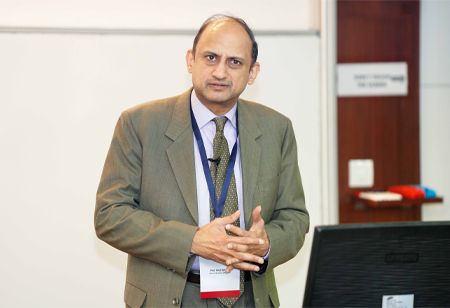
“India needs market-friendly reforms, not incumbent-friendly reforms, in the banking sector,” signified Prof. Viral V. Acharya during his keynote address at the IMR Doctoral Conference 2025 (IMRDC 2025). If we speak of the conference, it was hosted by the Indian Institute of Management Bangalore (IIMB), and was commenced on January 17th 2025 with thought-provoking discussions on pivotal topics in management and finance.
Delivering a compelling talk titled “Banking Sector in India: The Past, the Present, and the Future,” Prof. Acharya inaugurated the conference organized by IIMB’s flagship quarterly journal, the IIMB Management Review (IMR), and the Office of the Doctoral Programme. This two-day event aims to foster collaboration and elevate the standards of doctoral research in management disciplines.
Crucial Insights
Offering an incisive analysis of the Indian banking sector's evolution over the past decade, Prof. Acharya highlighted how it stabilized after the excesses of the prior decade, especially in the aftermath of the Global Financial Crisis. Furthermore, he delved into the current challenges posed by digital finance and competition from non-bank lenders, while also shedding light on the sector’s future trajectory in risk management and macroeconomic stability.
Political Economy of Banking
An emphasis was also made by Prof. Acharya on the intricate interplay between the Indian banking system and political economy. He challenged the conventional belief that nationalization of banks primarily aimed to foster financial inclusion, asserting instead that political objectives often shaped such decisions. Also, he noted how government priorities have historically influenced banking policies, often using banks as vehicles for populist expenditure.
Institutional Reforms and Financial Stability
The keynote highlighted various institutional reforms, focusing on:
1. Lowering inflation and borrowing costs
2. Ensuring external sector stability
3. Strengthening banking sector health
4. Promoting financial inclusion and credit penetration
5. Enhancing fiscal stability
Adding to this, Prof. Acharya also examined the pressing issues of Non-Performing Assets (NPAs), Stressed Asset Ratios, and capital infusion by the Government of India into Public Sector Banks (PSBs).
Digital Finance: A Bright Spot
Discussing the transformative impact of digital finance, Prof. Acharya praised India’s foresight in embracing this revolution, noting the significant boost post-COVID. He linked digital finance advancements to increased financial inclusion and economic resilience.
India’s Economic Paradoxes
The keynote speaker also explored critical paradoxes in India’s economy, which encompasses the ‘savings glut of the rich’ and concentrated wealth gains. Here, Prof. Acharya highlighted challenges such as indebted demand from the not-so-rich, sector-wise job creation, and stagnant real wages in the formal, informal, and rural sectors. He critiqued the lack of trickle-down effects from India’s growth engine and underscored the importance of market-friendly reforms over incumbent-friendly approaches.
In closing, he encouraged participants to base their future research on actionable insights drawn from his talk, emphasizing the value of research in influencing policy and identifying flawed strategies.
Welcoming Delegates
Prof. Rishikesha T. Krishnan, Director of IIM Bangalore, inaugurated the event by commending the conference’s growth and the global stature of the IIMB Management Review. In his introduction of Prof. Acharya, he lauded his contributions to academia, policy, and regulation, urging participants to maximize the opportunities provided by the event.
About the Speaker
Prof. Viral V. Acharya, a distinguished academic and former Deputy Governor of the Reserve Bank of India (2017–2019), has an illustrious career in monetary policy, financial markets, and financial stability research. Currently the C.V. Starr Professor of Economics at NYU Stern, Prof. Acharya is also an editor and board member for prestigious academic and professional organizations.
About IMRDC
The IMR Doctoral Conference is a premier platform for doctoral research in management and allied disciplines. The event, renowned for its meticulous feedback system, continues to foster a culture of high-quality research and collaboration. This year, the conference received 100 full paper submissions, with 11 selected through a rigorous three-tier review process for presentation. IMRDC 2025 reaffirms IIM Bangalore’s commitment to advancing academic excellence and fostering meaningful dialogues on pressing global and regional issues in management and economics.