
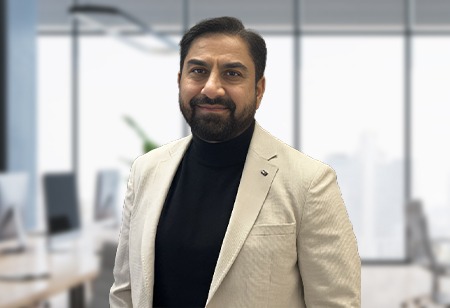
In an exclusive interaction with Adlin Pertishya Jebaraj, Correspondent at Finance Outlook, Sudhir Chandi, Director, Resurgent India Limited, points out the changing market environment of the Indian capital raising landscape, characterized by a lack of traditional bank-based financing to a multimedia range of financing, including equity markets, corporate bond financing and securitization, as a result of regulatory, environmental and market pressures.
Sudhir Chandi is an experienced financial service professional with nearly thirty years of experience in the investment banks, corporate advisory and restructuring. His experience is in mergers and acquisitions, private equity and strategic restructuring, in which he has always provided value-based solutions to both the corporates and the institutional stakeholders.
How do you see capital-raising strategies evolving across domestic and global markets in the current economic environment?
The capital raising strategies should be considered from a domestic and global perspective. First, it is essential to note the geopolitical uncertainty that is currently being experienced, especially the current war-like state in the oil and gas sector. The effect of such developments on the global economies in the long-term is yet to be evaluated.
However, supposing a situation where the situation becomes stable in the short-term, attention should be diverted to the underlying economic environment before these disruptions take place. These are volatile interest rates, increased regulatory attention, and growing focus on Environmental, Social, and Governance (ESG) aspects. These are crucial factors that should be put into serious consideration when tapping capital markets.
How do you facilitate alignment between global investors’ expectations and the financial realities of Indian businesses?
First of all, it should be noted that there are some geopolitical doubts that have existed so far, most notably the war-like situation that oil and gas are engaged in. The effect of these developments on the global economies in the long term cannot be evaluated at this point.
But considering a situation in which conditions become stable in the short-term, it should be considered in the context of the underlying economic environment that was already there before these disruptions were experienced in the first place. These are events like fluctuating interest rates, increased regulatory oversight and growing focus on Environmental, Social, and Governance (ESG) issues. These factors are critical and need to be taken into consideration extensively during accession to capital markets.
Conventionally, bank borrowings have been the main source of funds of the Indian corporates. But there is an undoubted shift in progress. Confidence in equity markets has indeed been increasing steadily as shown by growth in the number of Initial Public Offerings (IPOs) and Follow-on Public Offerings (FPOs). Simultaneously, there is increased presence and growing strength in corporate bond markets in India. Also, securitization is an emerging trend as an alternative means of financing. Taken together, these trends bring to the fore the rise of diversified and changing sources of Indian financial ecosystem capital.
Also Read: How Structured Credit Is Transforming India's Investment Market
How do you assess the financial viability of distressed assets, and what frameworks do you use to maximize stakeholder value?
When it comes to distressed assets, the first step is to establish a clear understanding of the cause behind the stress. This may be due to the cyclical forces making an impact on the industry, withdrawal or flight of funds or improper capital structure, especially over reliance on the debt financing.
After defining the underlying issue, one should develop a suitable resolution strategy. It includes assessing whether the operations could be improved to achieve profitability again, whether a management change would achieve more positive results, or whether a capital structure restructuring would fit the imbalance.
The most important aspect of this process is to carry out a thorough scenario analysis. This involves the evaluation of the likelihood of the company surviving and contrasting it with the possibility of the asset being liquidated. These situations give a holistic picture of what can happen and make a decision. Based on such analyses, a systematic revival plan may be established whereby the aim of the plan would be to ensure that the value of the stakeholders is maximized.
Could you elaborate on the role of NCLT processes and how advisory firms can accelerate resolution timelines and improve recovery outcomes?
The National Company Law Tribunal (NCLT) is an important development in contrast to the traditional ones, including Debt Recovery Tribunals (DRTs) and civil courts. It is developed as a time-limited resolution model, and a stipulated 270-360 day resolution period exists.
Nevertheless, in reality, the timeline of resolutions is frequently longer than this, ranging between one and a half years and up to four years. In this scenario, the significance of Resolution Professionals (RPs) and advisory firms is extremely essential.
There should be a proactive approach. This is also in pre-marketing bad assets and creating awareness to potential investors so as to create interest. It is also imperative to prepare a good quality and an extensive Information Memorandum that will act as a major document when attracting credible bids.
The other important issue is the proper education of the Committee of Creditors (CoC). It is also significant that creditors should be able to see the real value of the asset in the mind of an investor, as opposed to basing their assessments only on their personal valuation standards. The value of a going concern is a point that should be highlighted, as it is generally large and more advantageous than the liquidation value.
Also, it is important to be efficient in the resolution process. These include reducing barriers to legal processes, meeting deadlines where possible and undertaking corrective actions to ensure the continuity of the business. The maintenance of the going concern status is especially relevant, since anytime an aspect of the status is broken; it is likely to result in a devaluation of assets. Thus, the preservation of value is one of the main tasks of the process.
Also Read: Building Trust Infrastructure for Digital India
How do you see the future of infrastructure financing and capital markets evolving in India over the next 5–10 years?
It is still difficult to evaluate the long-term consequences of current geopolitical tensions, such as the conflicts with Iran. But in a wider view, India would need to invest heavily in its infrastructure to achieve its goal of being a developed economy by the year 2047.
It is believed that it will require an investment of about ₹150 trillion in the next five to six years. The run rate of investments today is approximately 25 trillion, and this is a huge gap that has to be filled.
Currently, almost three-quarters of infrastructure funding are bank-sourced. Nevertheless, banks have natural problems in financing long gestation infrastructure projects as a result of the disjointure of assets and liabilities. This has in the past led to the development of non- performing assets (NPAs) in the infrastructure sector.
In the future, capital markets will be required to take a more leading role in filling this gap. Retail activity in capital markets is growing, which is a positive development that enhances the scale of investment. Already gaining momentum, instruments like Infrastructure Investment Trusts (InvITs) will likely have a bigger role in infrastructure project funding.
In addition, securitization markets will play a vital role in allowing effective capital mobilization. Besides the local sources, it will be necessary to attract foreign capital, especially the pension funds and huge institutional investors. This will be achieved by having a stable macroeconomic environment such as currency stability and good global interest rates, whereby investors will be in a position to secure their capital and generate decent returns.
What advice would you offer to young or general investors as they begin their investment journey, particularly in times of financial uncertainty?
To the general investor, the first thing to keep in mind is that profitability should be the main priority, not growth at all costs. In the past, especially in the year 2010, investment strategies were greatly angled on aggressive growth, although it was not given enough attention in regard to sustainable returns.
Conversely, the present tendencies on the market that are mainly affected by the global investors are more focused on profitability and stable and sustainable performance. This is a move towards an advanced and strict investment strategy.
As far as companies interested in making investments are concerned, the same rules. The companies need to work on establishing sustainable business models that are profitable as well as ensuring good corporate governance practices and operating with integrity. These are key components of establishing confidence in the long term investor and the continued value generation.