In my 10+ years as a Chartered Accountant providing CFO services to businesses across India, I've watched finance teams obsess over metrics that lag reality by weeks, sometimes months. We track receivables aging, monitor working capital cycles, and build elaborate models forecasting cash flows. Yet we remain largely blind to a force that can evaporate enterprise value overnight: reputation.
Consider this: when a negative news cycle hits a company, the stock price often moves within hours. Customer sentiment shifts within days. But the CFO's dashboard? It catches up in the next quarterly review, long after the damage is done.
The Gap Between Perception and Financial Reality
Traditional financial metrics excel at measuring what has already happened. Revenue tells us what customers paid last quarter. EBITDA reflects operational efficiency from completed transactions. Even forward-looking metrics like order books are, at best, committed intentions.
What they don't capture is the sentiment that precedes these numbers. A pharmaceutical company facing questions about drug safety doesn't see revenue impact immediately—but the reputation erosion begins the moment the first concerned article appears. A bank dealing with service complaints on social media won't see deposit outflows for weeks, but the trust deficit starts accumulating in real time.
In India's increasingly connected economy, where news travels at WhatsApp speed and consumer activism is rising, this gap between reputation events and financial recognition has become a material risk that most finance functions are unequipped to address.
Reputation as a Leading Indicator
The case for treating reputation data as a financial metric rests on a simple premise: public perception is a leading indicator of financial performance. Positive coverage and sentiment typically precede customer acquisition. Negative sentiment precedes churn. Media scrutiny in some cases often precedes regulatory action – for which it’s always better to be prepared.
This isn't speculative. Research consistently shows correlation between media sentiment indices and subsequent stock performance, between social media sentiment and sales trajectories, between employee review trends and talent retention costs. The data exists—it's simply not sitting on the CFO's desk.
For Indian businesses specifically, as we grow manifold across borders - where brand trust remains a significant driver of consumer choice and where information asymmetries still exist across markets, real-time reputation intelligence offers a genuine competitive advantage. A consumer goods company that can detect emerging negative sentiment in tier-2 cities before it becomes a national story has time to respond. A financial services firm that monitors trust indicators alongside credit metrics makes better lending decisions.
From Monitoring to Intelligence
Traditional media monitoring—tracking mentions and clippings—has existed for decades. What's changed is our ability to transform this into actionable reputation intelligence. Modern AI systems can process thousands of news sources, social media streams, and digital conversations simultaneously, extracting not just mentions but sentiment, context, and trajectory.
The evolution mirrors what happened with financial data. We moved from periodic accounting reports to real-time dashboards, from manual ledgers to automated reconciliation. Reputation data is undergoing the same transformation—from retrospective clipping services to predictive reputation intelligence.
For the CFO, this means the possibility of a new metric on the dashboard: a reputation score that moves in real time, alerts when sentiment crosses thresholds, and correlates historically with business outcomes. Not as a replacement for financial metrics, but as a complement—a leading indicator that provides early warning and strategic insight to be prepared well in time.
Also Read: Intelligent Risk Management: How AI Is Transforming Banking Security
Practical Implementation
Integrating reputation data into financial planning doesn't require reinventing your finance function. It starts with recognition—acknowledging that intangible factors drive tangible outcomes. From there, the path involves identifying key reputation indicators relevant to your industry, establishing baseline measurements, and building correlation analysis against financial metrics.
For a manufacturing company, relevant indicators might include environmental coverage and community sentiment. For a consumer brand, social media sentiment and influencer mentions matter more. For financial services, trust indices and complaint trajectory deserve attention. The specific metrics vary; the principle of measurement remains constant.
The investment required is modest compared to traditional business intelligence infrastructure. Cloud-based reputation intelligence platforms now offer sophisticated analysis at price points accessible to mid-market companies, not just large enterprises. The barrier isn't cost—it's awareness and integration.
The Bigger Picture
India's economy is on a trajectory toward unprecedented scale. As we grow, so does the complexity of stakeholder management—customers, employees, regulators, communities, investors. Each group forms perceptions that ultimately manifest in financial outcomes.
The CFO of the future will need to be fluent in this language of perception. Not replacing financial rigor with public relations—but augmenting backward-looking financials with forward-looking reputation intelligence. The companies that figure this out early will have an edge: they'll see around corners that their competitors miss.
The tools exist. The data is available. The correlation is demonstrable. What remains is for finance leaders to close this blind spot—to bring reputation into the same rigorous, measured framework we apply to every other driver of enterprise value.
The question isn't whether reputation affects your bottom line. It's whether you're measuring it before or after it does.
About the Author
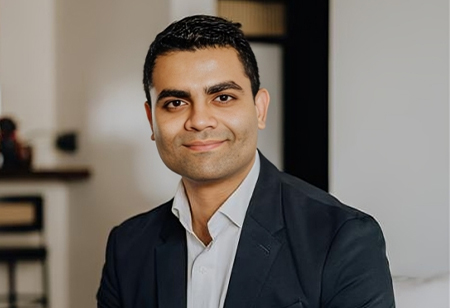
Siddharth Saraf is a Chartered Accountant, Director at Opulus Capital, providing virtual CFO services and financial advisory to growth-stage businesses across India.