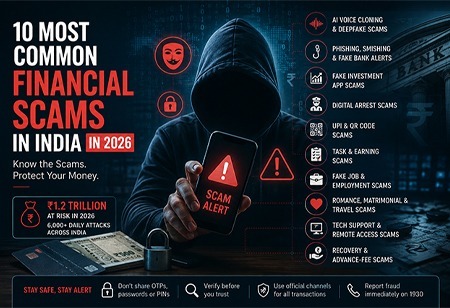
9. Recovery & Advance-Fee Scams
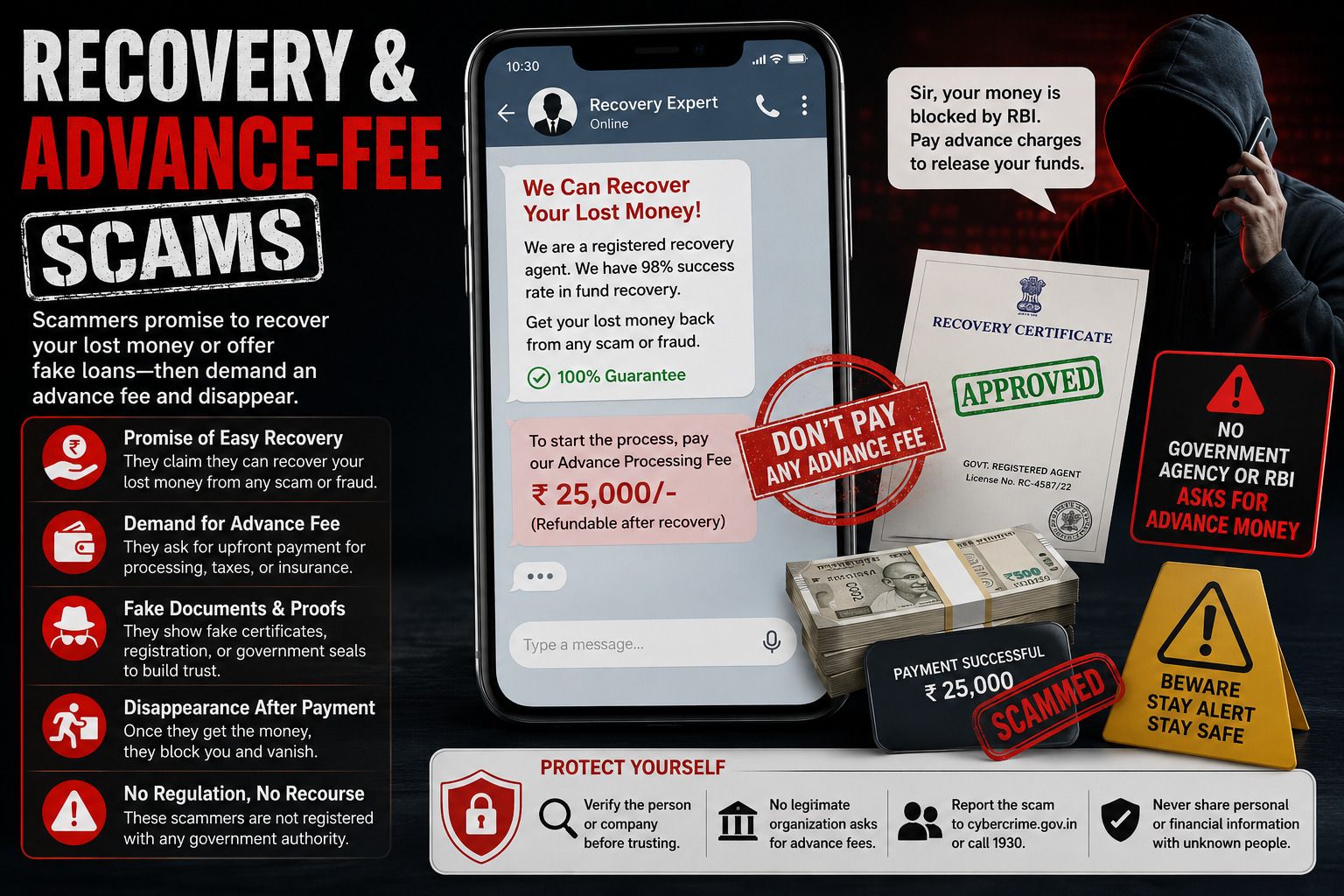
● The Real Scenario: A person who was recently scammed out of Rs 2 Lakhs posts about their ordeal on X (Twitter) or Facebook looking for help.
● How It Works: A rogue "ethical hacker" or fake cyber cell agent comments on the post, claiming they can easily recover the lost money using specialized software. They ask for an upfront "software activation fee" or "file processing fee" of Rs 15,000. Once paid, they block the victim, scamming them a second time.
● How to Avoid: The only entities capable of freezing and recovering scammed funds are registered banks and government police cells. Never pay upfront fees to private individuals promising recovery services.
What Financial Industry Experts Recommend
“If you encounter suspicious activity or believe you have been scammed, promptly secure your accounts, report to your bank and authorities, and seek trusted support.” — Mastercard
The Scale of Recovery and Double-Scam Fraud (2026 Data)
Recovery scams exploit victims after the original fraud by promising to retrieve lost money in exchange for an upfront fee. Although there is no reliable India-wide 2026 dataset quantifying recovery-scam losses separately, the scale of India's broader fraud-reporting ecosystem highlights the importance of using official channels. The Department of Telecommunications said citizens had submitted 11.18 lakh suspected-fraud communication reports through Chakshu by July 15, 2026.
● The Victim-Targeting Pipeline: Recovery fraud is now the fastest-growing follow-up scam in India. Data from the National Cyber Crime Reporting Portal (NCRP) shows that approximately 18% of individuals who report an initial cyber fraud are approached by fake recovery agents within 48 hours of posting their ordeal online.
● The Cost of the Second Trap: While the initial scam might drain lakhs, the recovery scam typically targets smaller, upfront amounts ranging between Rs 10,000 to Rs 40,000. Scammers brand these as "legal processing charges," "blockchain node activation fees," or "cyber cell registration costs."
● Social Media Scraping Bots: Scammers use automated keyword bots on platforms like X (formerly Twitter), Facebook, and Instagram. The moment a user posts keywords like "scammed," "lost money," "UPI fraud," "SBI block," or tags handles like @Cyberdoom or @MD_I4C, automated or manual accounts reply within minutes claiming: "Contact @Tech_Recovery on Instagram, they got my money back instantly.
● Complex Identity Theft: Over 50% of these fraudsters impersonate legitimate figures. They set up fake profiles using the names, logos, and photos of real IPS officers, state cyber crime cell divisions, or well-known ethical hacking firms to build trust.