Comparative Analytics: Making the Decision
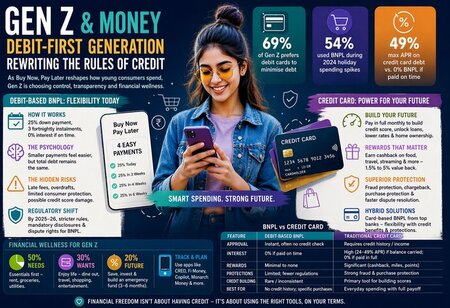
Context determines which tool wins. During the 2024 holiday season, 54% of Gen Z used BNPL - even those who owned credit cards. The reason was often psychological: BNPL felt lighter, less like "real" debt, and more controllable. The 0% interest framing won against credit card APR fears, even when those fears were misplaced for consumers who pay in full.
The total cost comparison, however, is clear: 0% BNPL (paid on time) costs nothing extra. A credit card balance carried at 24-49% APR costs enormously. But a credit card paid in full costs nothing and builds credit. The middle option - BNPL missed payments - can also cost enormously, in fees and credit damage.
Debit-Based BNPL vs Traditional Credit Card
|
Feature |
Debit BNPL |
Credit Card |
|---|---|---|
|
Approval |
Instant, often no credit check |
Requires credit history / income |
|
Interest |
0% if paid on time |
High (24–49% APR) if balance carried; 0% if paid in full |
|
Rewards |
Minimal to none |
Significant (cashback, miles, points) |
|
Protections |
Limited; fewer regulations |
Strong fraud & purchase protection |
|
Credit Building |
Rare / inconsistent |
Primary tool for building scores |
|
Best For |
No credit history; specific planned purchases |
Everyday spending with full monthly payoff |
On credit scores: the nuance matters. Most BNPL providers run only a "soft" pull - invisible to bureaus - at approval. Your score is unaffected. But if you default, many providers will now report that, and the damage can be severe. You get no credit benefit from paying on time, but you absorb the full cost of paying late. This asymmetry is the clearest argument for including a traditional credit card in your financial toolkit, even if you primarily use BNPL.
The Verdict: Not Either/Or
The smartest Gen Z financial strategy is not "BNPL over credit" or "credit over BNPL." It is intentional tool selection. Use BNPL for specific, planned purchases where you have the cash available and simply want to spread timing - never to buy something you cannot currently afford. Use a credit card for everyday spending, paying in full monthly, to build the credit score that will matter enormously at 28, 32, and beyond.
Build your emergency fund first. Follow the 50-30-20 framework. Track your obligations in one place. And recognise that the "debit-first" instinct - the desire to avoid debt - is genuinely healthy. The goal is to apply that same rigour to all forms of spending commitment, including the ones with "zero interest" in the name.
Financial freedom, for Gen Z, is not the absence of credit. It is the ability to use every financial tool on your own terms - with full awareness of the actual costs.