
.jpg "GST on UPI MDR NPCI Guidelines and Small Merchant Exemptions Explained")
Does GST Apply to UPI MDR? Official Clarification
GST on MDR is different from GST on the underlying UPI transaction. Under the proposed framework, the MDR is a payment-processing fee charged to merchants on eligible transactions. GST may apply to the fee under the applicable tax rules, rather than to the entire amount transferred through UPI.
NPCI clarified in September that GST paid on MDR by eligible GST-registered merchants can be adjusted against their output GST liability through Input Tax Credit (ITC), subject to the applicable GST conditions. Merchants should check their tax invoices and eligibility before claiming credit.
Krishan Sharma and Nida Rahman, Assistant Professors at Bennett University, highlighted the need to examine how UPI transaction charges could support the financing of digital payment infrastructure without significantly distorting consumer and merchant behaviour. Their perspective underscores the importance of balancing infrastructure sustainability with the affordability and convenience that have driven UPI adoption.
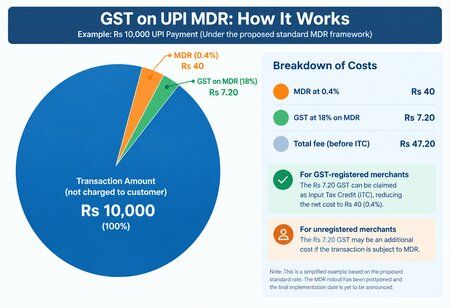
Example: GST on a Rs 10,000 UPI Payment
If a Rs 10,000 merchant transaction falls within the proposed standard MDR framework:
- MDR at 0.4%: Rs 40
- GST at 18% on the MDR: Rs 7.20
- Total fee before any eligible ITC: Rs 47.20
For a GST-registered merchant eligible to claim the full Rs 7.20 as ITC, the GST component may be offset against output tax liability. The Rs 40 MDR remains a payment-processing cost.
For an unregistered merchant who cannot claim ITC, GST on the fee may represent an additional cost if the transaction is subject to MDR. This is one reason the proposed small-merchant exemption is important.
Also Read: UPI Scams in India 2026: 10 Fraud Ways, Warning Signs & How to Report
Important: The example illustrates the proposed standard rate. Since the MDR rollout has been postponed, merchants should not assume that the new fee is already being charged under the revised framework. The final implementation date remains unannounced as of October 23, 2026.