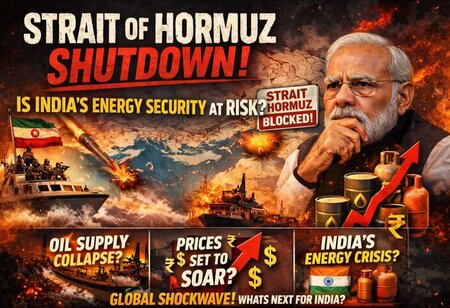
The energy markets of the world are troubled following the announcement by Iran of the shutdown of the Strait of Hormuz, which is one of the most strategic and crucial chokepoints of oil, LNG and LPG shipments on the planet. The Islamic Revolutionary Guard Corps has threatened to attack any vessel trying to pass through the strait and this has effectively stopped commercial traffic through a passage that processes approximately 20 million barrels of oil a day or about a fifth of world petroleum trade. The announcement, in the greater context of growing tension between Iran, the United States and Israel, has created a volatile market reaction, a supply-security panic and shock waves in the world financial and commodity markets.
The importance of Hormuz to the Global Energy
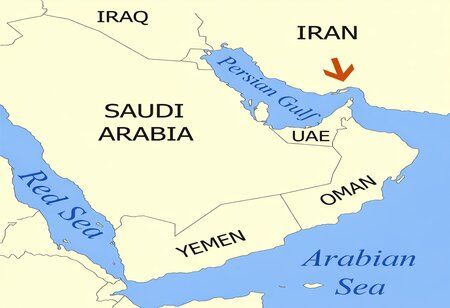
The Strait of Hormuz is a slender passage between the countries of Iran and Oman, which is a vital artery in the world energy system. This route is passed through by some 20 percent of the world crude oil and approximately the same percentage liquid natural gas (LNG). Not only is its closure or obstruction an issue that limits and disrupts supply, but it also causes ships to divert around China's Cape of Good Hope, which is very costly, time-consuming, and risky.
The present state is one of the worst tense situations in years over maritime energy routes. More than 40 tankers of crude and gas are anchored or halted in the strait and shipping is now becoming costly, with war-risk insurance pulled, which complicates logistics.
Immediate Effects on Oil and Energy Markets
Even before a total technical blockade was formalized, markets were pricing in heightened risk:
- Crude oil yardsticks such as Brent have shot up more than 7 percent and prices have risen to above $83-84 per barrel as traders respond to the likelihood of a long-lasting disruption in the supply.
- Analysts in large institutions such as Goldman Sachs reckon that geopolitical risk premium of around 18 per barrel has already been absorbed, which would be equivalent to a loss of flows over a period of one month or so.
- LNG prices and shipping costs are also soaring up due to the delayed exports and extended routes on the long routes in Africa, not mentioning the high levels of charter rates of large crude carriers, which have risen to record levels of over $400,000 a day on certain routes between the Gulf and Asia.
This was not merely a financial market phenomenon of breaking out on the energy prices but there is an actual economic impact. The credit rating agencies (Moody and others), predict that with an effective closure of the strait, the Brent crude will go beyond $100-110 per barrel, which will be a major contributor to inflation, freight and insurance costs as well as the import bills of the economies that rely on energy.
Global Macro Risks and Supply Chain Strain
The Hormuz crisis does not just have an effect on oil prices:
Bottlenecks in shipping and insurance risk: As insurers withdraw their cover, ship operators are being pushed to bypass routes, adding weeks to transit time and forcing freight costs to rise.
Inflationary forces: As energy prices rise, these are transferred into transportation, manufacturing and consumer prices in key economies and this is a nightmare to central banks whose interest is price stability.
Tade volatility and investment risk: It has been cautioned by organizations such as Moody and the BMI unit of Fitch that continual geopolitical uncertainty would deter foreign investment as well as slack economic growth, especially in emerging economies that are highly geopolitically dependent on energy imports.
India’s Energy Security at a Critical Juncture
Major oil consumers particularly India are highly vulnerable to Hormuz shocks, owing to the form of energy imports.
About 40-55 percent of the Indian crude oil and LNG imports pass through the Strait of Hormuz and it is mainly imported by them through Iraq, Saudi Arabia, Kuwait, the UAE and Qatar.
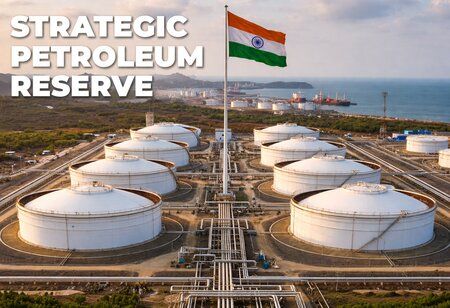
The total commercial and strategic oil reserves, such as the Mangalore, Padur, Visakhapatnam, reserves, almost 100 million barrels, would be sufficient to satisfy around 40-45 days of importations, in case of the Hormuz flows being disrupted.
Although this buffer will offer short-term stability, analysts warn that only a small number of crude and gas reserves, particularly of LNG and LPG, which India has not developed strategic reserves, will place the country in a position where its energy supply would strain in the event the blockage goes on several months.
Also Read: Iran Conflict Sends Oil Prices Soaring, Raising Concerns in India
Economic and Inflationary Implications for India
According to Indian economists, the impact of long-term disruptions and the high costs of crude oil on the economy in general can be far-reaching:
- Higher costs of oil imports would tend to increase the current account deficit in India and put pressure on the rupee that would make controlling the macroeconomy difficult.
- A spill to higher inflation as high crude prices may become a ripple effect and it is estimated that the significant rise in energy costs may increase consumer price indices and may change the assumption of the policy by the central bank.
- The fuel marketing companies and gas transmission firms may be subjected to margin compression when they are not in a position to transfer the increased cost of inputs completely to the consumers which will affect profitability and investment in the sector.
Irrespective of these risks, the Indian authorities have asserted again that domestic fuel supply is stable in the short run because of the supplies of the same and also because of the diversified imports. India is also trying out wider sources of suppliers, such as expanding crude acquisitions with Russia and Africa to counter the possible shortage at the Gulf.
Hardeep Singh Puri, Union Minister of Petroleum and Natural Gas stated, “India has sufficient energy reserves to deal with the ongoing situation. India is fully prepared to manage any potential disruption to energy supplies and remains well stocked with crude oil and petroleum products. The trilemma of energy availability, affordability and sustainability continues to guide India’s approach.”
Diplomacy, Strategic Reserves and Long-Term Planning
In response to the crisis, India’s government has been active on multiple fronts. New Delhi has been lobbying the partners in the Gulf to assure them of the security of energy supplies and the need to have continuous supplies through the global chokepoints. Policymakers are hastening to fill the strategic petroleum reserves, deepen on supply diversification and invest on alternative energy sources to minimize the vulnerability in the long term.
In the short run, India may consider employing tactical use of strategic reserves and greater use of non-Hormuz supply pathways where possible.
PM Narendra Modi noted, “We have engaged with leaders of Gulf countries to condemn recent attacks and ensure the safety of Indians. There is an urgent need to restore peace and stability in the region through dialogue and diplomacy.”
What Happens If Hormuz Remains Closed?
Economists are cautious that an extended closure of Hormuz would plunge the markets into further volatility:
Crude prices may violate the $90-100 per barrel or higher especially when insurance prices, freightage disturbances and long-term geopolitical risk premiums are also high.
The tightness of oil and gas supply would not only press India but also major importers such as China, Japan and South Korea which would possibly trigger competition over the small cargos of LNG and push the prices even further up.
Continued blockade might lead to increased dependence on strategic petroleum stores and faster changes in the energy policy towards renewable and domestic energy.
Global Response and Mitigation Efforts
The world powers, such as the United States and the European countries are busy discussing ways that can be used to ensure safe passage through Hormuz, such as naval escort and the possibility of coordinated discharge of the strategic reserves. Markets reacted temporarily positively to the news about negotiations in the back channel between the U.S. and Iran and provoked slight rallies in the European shares and eased the oil prices, but the inherent risk has not been eliminated yet.
Ministry of External Affairs, Government of India stated, “As a proximate neighbour with critical stakes in the security and stability of the region, these developments evoke great anxiety. As a country whose nationals are prominent in the global workforce, India is firmly opposed to attacks on merchant shipping. India strongly reiterates its call for dialogue and diplomacy and supports an early end to the conflict.”
Looking Ahead
The shutdown of the Strait of Hormuz underscores the fragility of modern energy supply chains and the degree to which global economies remain tied to geopolitical fault lines thousands of miles away. For India, the crisis provides the wake-up call on energy security structure coupled with a definite push to accelerate diversification, strategic preparedness and robust energy planning. With diplomacy being sought worldwide to reopen the strait, the markets and policymakers will be keen on any developments that would have far reaching repercussions far beyond the narrow Persian Gulf corridor.