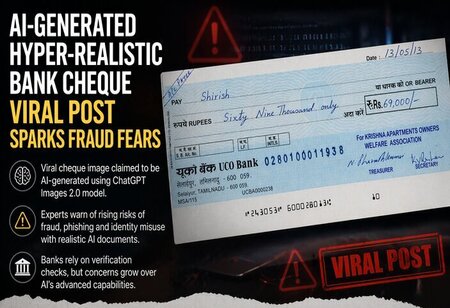
A viral social media post has triggered fresh concerns over AI misuse after a user shared a hyper-realistic cheque generated using advanced image tools. The image appeared to be an official UCO Bank cheque for Rs 69,000, made payable to the user himself, who claimed it was created using OpenAI’s ChatGPT Images 2.0 model. The post, captioned “We are so cooked,” quickly went viral, intensifying debate around the risks of AI-generated financial documents.
Key Highlights
- Viral AI-generated cheque raises concerns over misuse of generative AI tools in financial fraud risks.
- Experts warn advanced AI can create realistic documents, increasing phishing, identity theft, and scam threats.
The post quickly gained traction online, with the creator claiming that the cheque was generated using OpenAI’s latest image model. The viral caption - “We are so cooked” - captured the growing anxiety around the potential misuse of such technology.
Rising Concerns Over AI-Generated Financial Documents
The incident comes at a time when newer AI models are significantly improving their ability to generate highly detailed visuals, including readable text and structured layouts. According to recent reports, the latest generation of AI image tools can accurately render complex formats such as documents, forms, and multilingual text—capabilities that were previously limited.
Experts warn that such advancements could blur the line between real and fake digital documents, increasing the risk of fraud, phishing, and identity misuse. Earlier studies have also highlighted how AI systems can unintentionally generate misleading or inaccurate outputs, potentially exposing users to scams.
Reactions across social media were largely cautious. Some users questioned how AI tools could generate seemingly authentic financial documents, calling it a potential breach of safeguards. Others pointed out that traditional banking checks such as verification of account details and secure barcodes would still prevent fraudulent encashment in most cases.
However, concerns escalated around the possibility of AI eventually generating fully functional barcodes or scannable elements, which could increase real-world risks.
Also Read: 71-year-old Vashi Resident Looses Rs 1.6 Cr in Online Investment Scam
Reality Check: Risk vs Practical Limitations
Despite the alarm, experts note that real-world fraud using such images remains difficult without valid backend data and banking authentication systems. Most financial institutions require verification mechanisms that go beyond visual checks.
Still, the episode underscores a growing challenge: as AI tools become more powerful and accessible, distinguishing between genuine and fabricated content is becoming increasingly difficult.