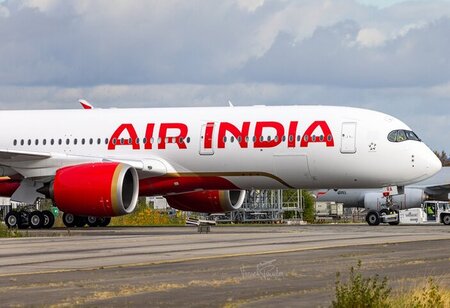
Air India reports $2.4 billion loss in FY26 and seeks fresh funding from Tata Group and Singapore Airlines amid rising operational challenges. The airline’s losses significantly exceeded earlier internal estimates of around $1.6 billion, highlighting the financial strain caused by multiple operational and external challenges during the year.
Key Highlights
- Air India reports $2.4 billion loss, seeks funding from Tata Group and Singapore Airlines.
- Operational disruptions, fuel costs and geopolitical tensions significantly impact Air India’s financial performance.
Tata Group, Singapore Airlines in Talks for Funding
Air India’s majority owner, Tata Group, along with minority stakeholder Singapore Airlines, which holds a 25.1% stake, are currently in discussions to inject fresh funds into the airline.
While the exact size of the capital infusion is yet to be finalized, reports suggest that the funding may fall short of the airline’s total requirements, potentially forcing Air India to explore additional financing options.
Key Factors Behind the Loss
Air India’s financial performance was impacted by a series of disruptions throughout the fiscal year. These included:
- A fatal crash involving a Boeing 787 Dreamliner.
- Closure of Pakistani airspace for Indian carriers.
- Escalating geopolitical tensions in the Middle East.
- Rising global fuel prices and operational costs.
These challenges led to higher route costs, reduced capacity, and weaker overall yields for the airline.
Also Read: TCS Result: Profit Rises 12%, Revenue at Rs 70,698 Cr for Q4 FY26
Operational Setbacks and Leadership Changes
The losses come at a crucial time for Air India’s transformation journey. CEO Campbell Wilson has announced plans to step down later this year, adding to leadership uncertainty.
Additionally, the airline has faced scrutiny over safety performance, ranking poorly in the aviation regulator’s latest audit. Despite aggressive fleet expansion plans, Air India has struggled to significantly improve service standards and profitability.
External Pressures Weigh on Performance
The airline’s operations were further disrupted after Pakistan closed its airspace in mid-2025, forcing longer flight routes to Europe and the United States, increasing fuel consumption and operational costs.
Tensions in the Middle East- accounting for a significant portion of Air India’s network- also impacted flight schedules and capacity, adding to financial pressure.