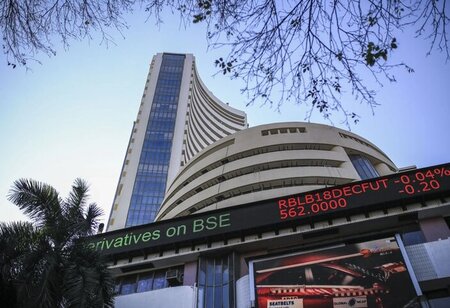
India is officially the fourth largest stock market in the world after reaching market capitalization of almost Rs 470 lakh crore, National Stock Exchange of India Managing Director and CEO Ashish Kumar Chauhan said.
Key Highlights
- India becomes the world’s fourth-largest stock market with market capitalization nearing Rs 470 lakh crore.
- NSE investor base expands from 15 lakh in 1994 to nearly 13 crore in 2026.
Indian stock markets have dramatically grown the investor participation and generation of the capital in India, becoming the strongest drivers in economic development of the country in last three decades, Chauhan said while addressing the Student Skilling and Investor Awareness Programme organised by Vignan's University, Securities and Exchange Board of India (SEBI) and the National Stock Exchange (NSE) at Guntur district in Andhra Pradesh.
India Join the Elite League of Global Markets
India's total capitalization of its stock exchanges now stands just behind the United States, China and Japan, further bolstering its position in the world of finance.
The Indian stock market has achieved tremendous growth from Rs 3.8 lakh crore in 1994 to around Rs 470 lakh crore in 2026, highlighting the magnitude of wealth creation and institutionalization over the years since the economic liberalisation phase of the country.
Chauhan pointed out that equity investment has become very fast democratised in India, with the number of investors increasing from 10-15 lakh in 1994 to almost 13 crore today. It is due to the retail investor sentiment, financial inclusion and their involvement in SIPs, along with the use of digital trading platforms, that the growth has been observed.
Stock Markets Driving India’s Economic Transformation
Chauhan said that Indian capital markets are no longer limited to institutional finance, but have become an important component of Indian entrepreneurship and innovation, which also play an important role in the development of the country's wealth.
“Stock markets are playing a crucial role in India’s economic growth. Converting household savings into productive market investments has significantly strengthened India’s economic resilience and accelerated formal capital allocation."
This transformation has been powered by regulatory reforms, technological modernisation, and improved investor protection frameworks introduced since the establishment of NSE in the early 1990s.
NSE to Launch Skill Development Centre at Vignan’s University
In a major push toward financial literacy and market-ready education, Chauhan announced that National Stock Exchange will establish a dedicated Skill Development Centre at Vignan’s University.
The centre will offer specialised training in:
- Trading and market operations
- Equity research and financial analysis
- Investment strategies
- Capital market technology
- Practical exposure from NSE Mumbai experts
The initiative aims to bridge India’s growing financial talent gap and equip students for careers in India’s expanding financial services ecosystem.
India’s Capital Market Story Is Far From Over
With India's investor base reaching 13 crore, the investing process is being digitalized, the overall participation in IPOs is high and institutional trust is growing and India is poised to compete with bigger financial centres globally in the next decade, according to analysts.
Also Read: NSE Investor Base Crosses 13 Crore Mark, Retail Participation Surges
India is a fast-growing major economy and its capital markets are getting more and more global by leaps and bounds in terms of scale, accessibility, and growth prospects.