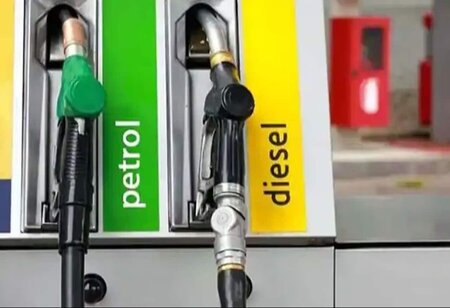
India’s state-run oil marketing companies (OMCs) on Friday raised petrol and diesel prices by around Rs 3 per litre across major metro cities, marking the first significant retail fuel price revision in nearly four years as surging global crude prices and prolonged geopolitical tensions in West Asia continue to strain India’s energy supply chain.
Key Highlights
- Petrol and diesel prices rise Rs 3 per litre, ending India’s nearly four-year fuel price freeze.
- Global crude surge and West Asia tensions force oil companies to revise fuel rates nationwide.
The latest hike follows nearly 11 weeks of price stability, despite rising international crude benchmarks and mounting under-recoveries faced by public sector fuel retailers including Indian Oil Corporation, Bharat Petroleum Corporation Limited, and Hindustan Petroleum Corporation Limited.
Revised Petrol and Diesel Prices Across Metro Cities
Following Friday’s revision, fuel prices in India’s four major metro cities now stand at:
City |
Petrol (Rs/litre) |
Diesel (Rs/litre) |
|---|---|---|
New Delhi |
97.77 |
90.67 |
Mumbai |
106.68 |
93.14 |
Kolkata |
108.74 |
95.13 |
Chennai |
103.67 |
95.25 |
Bengaluru |
106.21 |
94.10 |
The increase comes amid elevated global crude prices hovering around $100–105 per barrel, fuelled by the continuing conflict in West Asia and disruptions near the Strait of Hormuz, a strategic energy corridor that handles nearly 20% of global petroleum flows.
Why Fuel Prices Have Been Raised Now
The government and oil retailers had held fuel prices steady since April 2022, except for a one-time Rs 2 per litre cut in March 2024 ahead of the general elections.
However, with India importing nearly 90% of its crude oil requirements, sustained global energy inflation has sharply increased pressure on domestic fuel economics.
Brokerage estimates suggest state-run refiners have been suffering daily under-recoveries approaching Rs 1,000 crore, while some analysts estimate total monthly losses have crossed Rs 30,000 crore amid elevated crude costs.
An analyst note from market experts at Emkay Global had earlier projected that India could eventually require cumulative fuel price increases of Rs 18-20 per litre over the next three to six months if crude prices remain elevated.
RBI Warned of Fuel Price Revision Risk
Earlier this week, Sanjay Malhotra warned that if the West Asia conflict persists, retail fuel price revisions would likely become unavoidable. “If this continues longer, it is only a matter of time before higher prices are passed on,” Malhotra said, highlighting the macroeconomic risks of prolonged oil volatility.
His comments followed Prime Minister Narendra Modi’s public appeal urging citizens to adopt temporary austerity measures, including reducing petrol and diesel consumption and postponing discretionary imports such as gold purchases to protect India’s foreign exchange reserves.
Economic Ripple Effect: Inflation Risks Return
The fuel price hike is expected to have a broader impact on India’s inflation outlook.
Brokerage estimates suggest that every Rs 10 per litre increase in petrol and diesel can push retail inflation higher by nearly 75 basis points after factoring in transportation, logistics, and secondary supply-chain costs.
Higher fuel costs could directly affect:
- Automobile demand recovery
- Logistics and freight rates
- Cement and industrial production costs
- Consumer goods pricing
- Urban commuting expenses
The development adds pressure on policymakers already navigating rupee weakness, rising wholesale inflation, and external account stress.
Also Read: India Hikes Gold & Silver Import Duty to 15% to Support Forex Reserve
What Happens Next?
Market watchers say the next direction for domestic fuel prices will depend largely on:
- Stability of crude oil above or below $100/barrel
- Any reopening or easing of disruptions in the Strait of Hormuz
- India’s strategic reserve deployment
- Government tax intervention or excise duty adjustments
For now, Friday’s revision signals that India’s long-standing fuel price freeze has entered a new phase of gradual recalibration as the country responds to one of the most significant global energy shocks in recent years.