
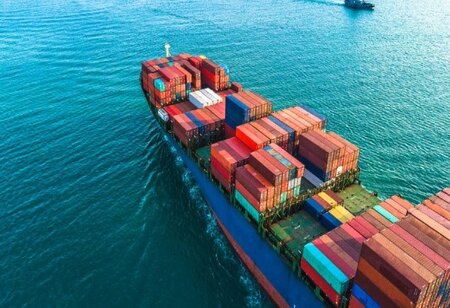
Indian FY26 exports touched an all-time high of $863.11 billion, marking a significant milestone for the country’s trade sector despite global economic uncertainty, rising geopolitical tensions, and tariff pressures across major markets.
Key Highlights
- Indian FY26 exports reached record $863 billion in FY26, driven primarily by strong services sector growth.
- Rising imports, logistics costs, and manufacturing gaps continue challenging India’s long-term export competitiveness globally.
According to revised Commerce Ministry data, India’s combined goods and services exports grew 4.59% year-on-year from $825.26 billion in FY25, driven primarily by strong growth in services exports.
Services exports emerged as the biggest contributor to the growth story, rising 8.71% to a record $421.32 billion during FY26, while merchandise exports increased modestly by 0.93% to $441.78 billion.
India Still Trails Global Export Leaders
Despite achieving record export numbers, India continues to remain significantly behind the world’s top exporting nations. China retained its dominance in global trade with goods exports nearing $3.8 trillion in 2025, while the United States recorded exports exceeding $2.18 trillion. Germany maintained exports of around $2.1 trillion, supported by its strong manufacturing and industrial ecosystem.
Services Exports Drive Growth Momentum
India’s IT, business solutions, and professional services sectors continued to fuel export growth during FY26. The Commerce Ministry highlighted rising global demand for digital services and professional expertise as a key driver behind the sharp rise in services exports.
However, economists caution that India’s merchandise exports are not expanding at the same pace, limiting the country’s ability to create large-scale manufacturing jobs and develop deeper industrial supply chains similar to China or Germany.
Electronics and Manufacturing Show Early Momentum
India’s electronics manufacturing sector has emerged as one of the fastest-growing export categories in recent years. Electronic goods have rapidly climbed India’s export rankings, supported by the government’s Production-Linked Incentive (PLI) schemes and the “Make in India” initiative. India has also become the world’s second-largest mobile phone manufacturer.
Market observers believe these developments indicate improving manufacturing capabilities, although India still remains in the early stages of deep global value-chain integration.
Also Read: Indian Trade Deficit Falls to $20.67 Billion in March 2026
Rising Imports and Logistics Costs Remain Challenges
While exports reached record highs, India’s imports also climbed sharply to nearly $979.4 billion during FY26, widening the trade deficit to approximately $119.3 billion.
Analysts said higher logistics costs, port congestion, and infrastructure inefficiencies continue to reduce India’s export competitiveness, especially in labor-intensive industries. India’s freight and logistics costs remain around 13% of goods value compared to 8-10% in many competing economies.
Additionally, geopolitical tensions in West Asia and rising US tariff pressures have created fresh uncertainty for exporters across sectors including textiles, steel, seafood, and engineering goods.
To support exporters, the Indian government is reportedly considering strengthening the Remission of Duties and Taxes on Export Products (RoDTEP) scheme and expanding export credit support measures.
India Targets $1 Trillion Exports
India has set an ambitious target of achieving $1 trillion in annual exports, a goal that would require accelerated growth in manufacturing, diversified export markets, and improved trade infrastructure.
Experts believe sustained policy support, reduced logistics costs, stronger trade agreements, and continued manufacturing investments will be critical to achieving that target.
Although India’s $863 billion export milestone represents substantial progress, analysts say the country’s global trade journey is still at a foundational stage compared to larger export-driven economies.