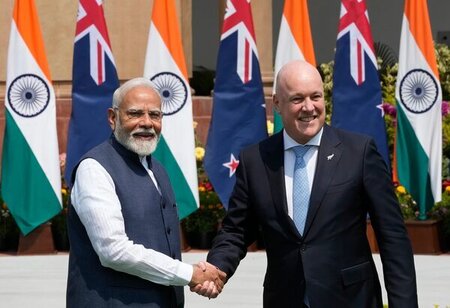
India and New Zealand have finalized a comprehensive Free Trade Agreement (FTA) that is expected to strengthen economic cooperation and expand market opportunities between the two countries. New Zealand Prime Minister Christopher Luxon described the pact as a landmark achievement that will generate new jobs, raise incomes, and significantly boost trade by granting New Zealand businesses access to India’s vast consumer market of around 1.4 billion people.
Key Highlights
- India-New Zealand FTA expected to create jobs, lift incomes, and expand bilateral trade opportunities.
- Agreement opens access to India’s 1.4 billion consumers, boosting exports and long-term investments.
Signed after negotiations that began in March 2025 and concluded within nine months, the agreement eliminates tariffs on a large portion of goods traded between the nations and improves market access for services and investment. India will receive zero-duty access for its exports to New Zealand, enhancing competitiveness for sectors such as textiles, engineering, pharmaceuticals, and agriculture. At the same time, New Zealand exporters will benefit from reduced or phased tariff cuts on about 95 % of their products entering the Indian market.
Beyond trade in goods, the FTA also covers services, mobility, and investment. It allows expanded movement for professionals, students, and skilled workers under new visa arrangements, and includes measures designed to facilitate investment flows between the two economies. New Zealand has also pledged up to $20 billion in investment into India over the next 15 years, signalling confidence in long-term economic partnership.
Also Read: India-EU FTA Talks Set to Address Key Trade & Policy Issues Today
Both governments have said the pact could pave the way for doubling bilateral trade within the next few years and expects to create broader opportunities for exporters, entrepreneurs, and consumers in both countries.