
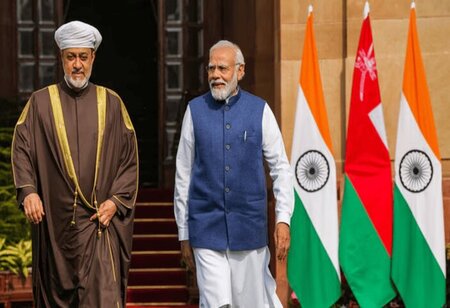
India and Oman are preparing to operationalise their recently signed Comprehensive Economic Partnership Agreement (CEPA) within the next three months, marking a major step forward in bilateral economic cooperation, Commerce and Industry Minister Piyush Goyal announced. The CEPA, signed on December 18 in Muscat in the presence of Prime Minister Narendra Modi and Omani leadership, is designed to liberalise trade, boost exports, and deepen economic ties between the two nations.
Key Highlights
- India–Oman CEPA to become operational within three months, boosting bilateral trade and export opportunities.
- Piyush Goyal highlights duty-free access for Indian goods, strengthening India–Gulf economic cooperation.
Under the agreement, Oman has agreed to grant zero-duty access on over 98% of its tariff lines, effectively making nearly 99.38% of India’s exports to Oman duty-free. This expansive tariff elimination covers a broad spectrum of products, including gems and jewellery, textiles, leather, footwear, engineering goods, pharmaceuticals, medical devices, plastics, furniture, agricultural products, and automobiles, many of which previously attracted import duties ranging from 5% to 100%.
In return, India will offer duty concessions on 77.79% of its tariff lines, facilitating imports from Oman and covering almost 94.81% by value. Both sides are completing procedural and regulatory formalities to make the pact effective by early next year. Observers note that the rapid move toward implementation — within months rather than years — reflects the strong strategic intent on both sides to capitalise quickly on trade opportunities.
Also Read: India's Export Jump 19% in November, Trade Deficit Narrows
Beyond goods, the CEPA also includes provisions that are expected to enhance services trade and investment cooperation. The deal could open up new avenues in sectors such as education, healthcare, information technology, and professional services, while offering more flexible mobility and stay provisions for Indian professionals working in Oman.
Officials and industry leaders have welcomed the pact as a timely boost for Indian exporters, particularly in labour-intensive and MSME segments, and as a significant step in expanding India’s economic footprint in the Gulf region. The agreement also aligns with India’s broader strategy to diversify export markets and strengthen trade links amid global economic shifts.
.jpg)