
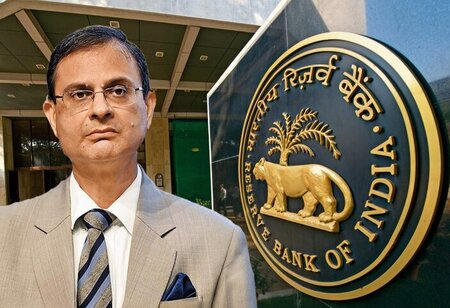
RBI MPC kept the repo rate unchanged at 5.25%, maintaining a “neutral stance” policy stance as it balances economic growth with rising inflation concerns. The decision was taken during the Monetary Policy Committee (MPC) meeting held between April 6 and 8 for the financial year 2026–27, chaired by RBI Governor Sanjay Malhotra. Alongside the repo rate, the standing deposit facility (SDF) rate was retained at 5.0%, while the marginal standing facility (MSF) rate and bank rate remained steady at 5.50%.
Key Highlights
- RBI MPC keeps repo rate unchanged at 5.25% amid rising inflation risks and global uncertainty.
- RBI maintains neutral stance to balance growth and inflation amid geopolitical tensions and rising oil prices.
The move aligns with market expectations, as economists had anticipated a pause in rate changes amid global uncertainties. The central bank had last reduced the repo rate by 25 basis points in December 2025 and continued with a wait-and-watch approach in its February 2026 policy review. The latest decision reflects the RBI’s cautious stance as geopolitical tensions, particularly in West Asia, continue to create uncertainty in global markets.
Vimal Nadar, National Director & Head, Research, Colliers India stated, "RBI has kept the repo rate unchanged at 5.25% in its first MPC meeting of the fiscal year. This along with the continuation of neutral stance reflects a ‘wait-and-watch’ approach amid ongoing West Asia crisis and its fallout on commodity & fuel prices and supply chain disruptions as well. Although inflation levels have inched up in recent times driven by crude price volatilities, it remains relatively contained, with a projection of 4.6% for FY 2026-27. Simultaneously, on the growth front, the GDP is forecasted to grow at 6.9%."
He further added, "While the outlook for overall real estate remains positive at this juncture, the likely impact of supply chain shocks and the resultant rise in construction materials can slow down ongoing and future construction activities. The intensity & duration of the ongoing crisis will have a significant bearing on consumption patterns including retail, hospitality and housing demand especially in the affordable & mid income segments. At the same, the fundamentals of the Indian economy remain strong and will provide a cushion for the real estate sector to remain resilient in the medium term."
Prakhar Agrawal, Director, Rama Group noted, "RBI’s decision to maintain the repo rate at 5.25% reflects a balanced and prudent approach amid evolving global uncertainties. This stability in interest rates is a positive for the real estate sector, as it sustains buyer sentiment and keeps home loan EMIs predictable for end-users. In an environment where inflation risks persist and global headwinds remain; a steady rate regime provides developers and homebuyers the confidence to plan long-term investments. We believe this move will continue to support housing demand, particularly in the mid-income and premium segments, while reinforcing overall market stability."
Mohit Mittal, CEO – MORES, added "The rate pause reflects the RBI's caution, but for the real estate sector, monetary policy is only one piece of the puzzle. The bigger issue is affordability across mid and affordable housing segments, which remain squeezed between stagnant wage growth and rising construction costs. The industry should use this period of policy stability to push for streamlined approvals, RERA enforcement, and better infrastructure investment in Tier 2 cities — that's where India's next real estate growth story is being written. Interest rates will eventually move; what the sector builds in the interim will determine who leads the next cycle."
RBI Governor Sanjay Malhotra highlighted that the global economy is currently facing significant challenges due to heightened geopolitical risks and supply chain disruptions. Rising crude oil prices, which have crossed $100 per barrel, have added pressure on inflation and the Indian rupee. He stated, “The global economy is facing unprecedented challenges from heightened geopolitical tensions and disruptions to supply chains.”
Also Read: RBI Keeps Repo Rate Steady: Impact on Home Loan Borrowers
Despite these global headwinds, the RBI emphasized that India’s macroeconomic fundamentals remain resilient. Malhotra noted that the economy is well-positioned to withstand external shocks, supported by stable growth indicators and controlled inflation levels. However, he cautioned that upside risks to inflation are increasing due to elevated energy prices and potential weather-related disruptions, even as core inflation remains relatively subdued.
Shrinivas Rao, FRICS, CEO, Vestian said, "The decision to keep the repo rate unchanged for an extended period comes as a welcome relief. It is likely to keep mortgage rates steady and competitive at a time when construction costs remain elevated due to the ongoing West Asia crisis. This move could help cushion the impact of rising input costs on demand and allow stakeholders to recalibrate their strategies in response to evolving market dynamics. However, this may be the RBI’s final status quo before the repo rate begins its upward trajectory."
Piyush Bothra, Co-Founder and CFO, Square Yards noted, "The current update on repo rates brings much-needed predictability for homebuyers and the real estate sector. With borrowing costs holding steady, demand, particularly in the mid-income and premium segments, is expected to remain resilient in the near term. This stability in interest rates also supports buyer sentiment and allows developers and lenders to plan with greater confidence.
"However, the RBI’s cautious tone suggests that stakeholders should remain prepared for potential shifts as inflation and global uncertainties continue to evolve. Any movement in rates going forward will be closely linked to external factors, and both homebuyers and industry players should stay mindful of changing macroeconomic conditions while making long-term decisions", he added.
Bajaj Broking Research, stated “RBI has kept the repo rate unchanged at 5.25% with a neutral stance, indicating a continuation of status quo amid global uncertainties. Inflation outlook remains broadly stable while growth outlook is slightly cautious, with no major surprises in the policy. Overall, the RBI maintains a calibrated and cautious approach, balancing inflation risks and growth concerns.”
"The RBI’s decision to keep the repo rate unchanged is a positive signal for the real estate sector, as it ensures stability in borrowing costs and sustains buyer confidence. For a growing market where infrastructure and planned developments are gaining momentum, steady interest rates play a crucial role in maintaining demand. Homebuyers continue to benefit from predictable EMIs, while developers can focus on timely delivery and expansion plans. Although a rate cut could have accelerated growth further, the current stance supports a stable and healthy market environment driven by long-term fundamentals and rising end-user interest", said Rajani Kant Mishra, Founder and Chairman, Amrawati Group.
Vishal Datt Wadhwa, Founder & CEO- CoWorkZen stated, "Holding rates was the right call. The environment doesn’t allow anything else — oil above a hundred dollars, the rupee under pressure, inflation building in the pipeline from sources monetary policy simply cannot address. For enterprises evaluating workspace decisions — GCC buildouts, regional expansion, flex footprint across IT-ITES corridors — what matters is not the rate itself but the signal. A disciplined central bank that refuses to overreact to a supply shock is one that corporates can plan around. Lease decisions in structured commercial spaces are made on 3–5-year conviction, not monthly rate movements. Today’s policy does nothing to disrupt the conviction."
The RBI MPC reiterated that maintaining a neutral stance provides flexibility to respond to evolving economic conditions. The central bank continues to closely monitor inflation trends, global developments, and domestic growth dynamics before taking any future policy action, signaling a data-driven approach in the coming months.