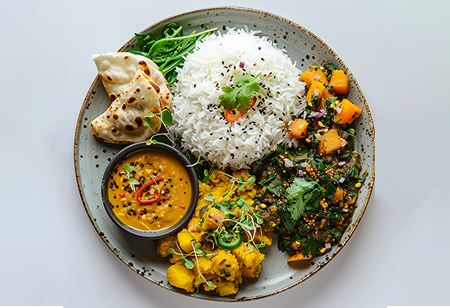
The cost of a vegetarian thali increased by 11% year on year (Y-o-Y), while the cost of a non-vegetarian (non-veg) thali decreased by 2% in September 2024, according to CRISIL Market Intelligence and Analytics Research projections issued on Friday.
The average cost of a thali is calculated using input costs from four areas of India: north, south, east, and west. Monthly price swings reflect their influence on household spending, with major items such as cereals, pulses, broiler chicken, vegetables, spices, edible oil, and cooking gas all contributing to price volatility.
Vegetable Thali Expenses are driven by High Pricing and Insufficient Supplies
The increase in the veg thali cost was mostly caused by a substantial increase in vegetable prices, which accounted for around 37% of the total cost. Onions, potatoes, and tomatoes, all major elements in the dish, suffered large price increases of 53%, 50%, and 18%, respectively, due to a decline in availability. The shortfall of onions and potatoes was caused by reduced market arrivals, whilst tomato output was hampered by severe rainfall in Andhra Pradesh and Maharashtra.
Pulse costs, which account for around 9% of the cost of a vegetarian thali, have also climbed by 14%. This increase is due to lower output last year, which resulted in lesser stock availability this year, putting further pressure on the entire cost of a vegetarian meal. However, an 11% fall in gasoline costs helped avert a more significant increase in thali prices. The price of a 14.2 kg LPG cylinder in Delhi fell from Rs 903 in September 2023 to Rs 803 in March 2024.
The cost of non-veg thali has dropped by 2%
A 13% drop in broiler pricing gave respite for non-vegetarian thalis, which are normally twice as expensive as their vegetarian counterparts. Broiler chicken, which accounts for 50% of the cost of a non-veg thali, has experienced price cuts amid consistent demand, contributing to a 2% year-over-year fall in non-veg thali expenses.
Thali Prices Remain Stable Month after Month
The monthly (M-o-M) cost of both vegetarian and non-vegetarian thalis remained steady. While onion prices increased by 14% due to limited rabi supplies and lower export duties, the gain was offset by a 2% reduction in potato prices and a 9% drop in tomato prices. The availability of potatoes from cold storage, as well as increased tomato deliveries from southern and western markets, all helped to keep the thali price stable. Stable broiler prices helped to keep non-veg thalis affordable as demand remained consistent.
Analyzing Diverging Patterns in Price
Pushan Sharma, head of research at Crisil MI&A, stated, "Costs of home-cooked thalis exhibited distinct patterns in September - The cost of a vegetarian thali grew by 11% year on year, while a non-vegetarian thali decreased by 2%. The increase in veg thali costs was mostly caused by an increase in vegetable prices. Onion, potato, and tomato prices increased by 53%, 50%, and 18% year on year, respectively, with the first two being driven by decreased arrivals and the third by the impact of severe rains on output. The non-veg thali cost, on the other hand, was pulled down by a year-over-year decrease in broiler costs."
Sharma anticipates that onion prices would reduce once the kharif supply (monsoon crop) arrives on the market. Potato prices are also expected to fall, while tomato costs may stay high owing to limited supplies.