
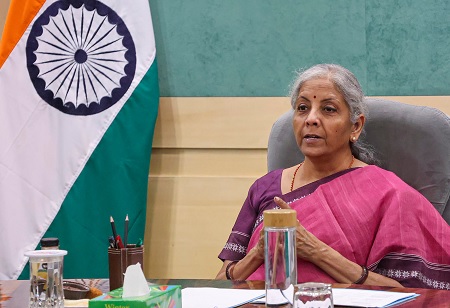
The India-US Trade Deal may face a longer wait after Finance Minister Nirmala Sitharaman said both sides have reached a “plateau” in negotiations. Her comments suggest there is limited room for further concessions, even as talks continue.
The India-US Trade Deal has been under negotiation as both countries seek to expand market access and address long-standing trade concerns. Finance Minister said the agreement has involved hard and rigorous negotiations, with further give-and-take becoming “very, very difficult.” However, she added that both sides could still move if there was room to operate.
Tariff Uncertainty Adds Pressure on Businesses
The prolonged negotiations could keep tariff uncertainty in place for Indian exporters selling into the US market. The United States finalized an additional 10% Section 301 duty on imports from India in July, with certain products excluded. According to India’s Commerce Ministry, around 45% of India’s exports to the US remain outside the scope of this additional duty.
The February 2026 framework had outlined an 18% reciprocal tariff rate for Indian goods, subject to the successful conclusion of an interim agreement. It also included plans for greater market access and higher purchases of US goods by India.
Also Read: Working Capital Management in Cable Manufacturing: Growth to Cash Flow
For businesses, a prolonged delay could make tariff costs and market conditions harder to predict. Exporters may also have to factor in the possibility of further changes while planning prices, investment and supply chains.
Key Highlights
- India-US trade talks have reached a “plateau,” with both sides facing limited room for further concessions.
- Tariff uncertainty and potential US measures linked to Russian energy are adding pressure to the negotiations.
- A trade deal is not imminent, but India and the US continue discussions on key unresolved issues.
Russian Energy Creates Another Challenge
The India-US Trade Deal is also being negotiated against a fresh tariff threat linked to Russian energy purchases. A US law signed on September 18 authorizes tariffs of up to 100% on countries purchasing significant volumes of Russian oil and gas. However, the tariffs are not automatic, and the final rate and implementation details remain uncertain.
India has raised concerns about the potential impact of the measure on bilateral relations and global energy markets. The issue adds another layer of complexity because India remains a major buyer of Russian crude.
Meanwhile, US Trade Representative Jamieson Greer said last week that a trade agreement with India was not imminent, although discussions were continuing. Commerce Minister Piyush Goyal recently held talks with Greer during his US visit to advance the negotiations.
For now, the India-US Trade Deal remains under negotiation, with tariffs, market access and wider economic issues continuing to shape the next phase of talks.