
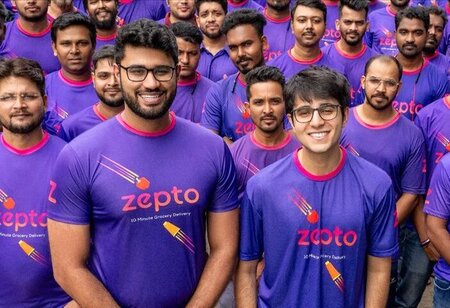
Quick commerce unicorn Zepto has made a significant move towards its initial public offering (IPO), filing revised draft papers with the Securities and Exchange Board of India (SEBI) for a listing of around Rs 11,000 crore. The offering is a new sale of equity shares of Rs 8,010 crore and an offer for sale (OFS) of equity shares to be sold by the existing investors.
Aadit Palicha-led company is set to launch IPO as soon as in July, thereby joining listed competitor Blinkit and Swiggy Instamart in India's fast-growing quick-commerce segment.
Key Highlights
- Zepto files updated IPO papers, aiming to raise Rs 11,000 crore through fresh issue and OFS.
- FY26 revenue surged to Rs 22,624 crore, while losses widened 26% to Rs 5,905 crore.
Fresh Capital to Fuel Expansion
The new draft red herring prospectus (UDRHP) states that Zepto will utilize the proceeds of the fresh issue to ramp up its dark store network, pay lease obligations, invest in technology and cloud infrastructure, fund marketing initiatives, pursue strategic acquisitions and to address general corporate needs.
The company was formed in December 2020 as Kiranakart Technologies Pvt. Ltd. and changed its name to Zepto Pvt. Ltd. in April 2025, and subsequently became a public limited company in the same year.
Revenue Surges, But Losses Continue to Rise
Zepto saw a significant jump in revenue for FY26, increasing its revenue from operations to Rs 22,624 crore from Rs 11,110 crore in FY25.
But, Zepto's aggressive growth approach continued to put pressure on profitability. In FY26, Zepto's net losses increased by 26% year-on-year, to Rs 5,905 crore from Rs 4,700 crore in FY25, making it one of the largest loss making startups in India.
The total income comprised of non-operating income (including interest income) was at Rs 23,128 crore during the year.
Quick-Commerce Scale Reaches New Highs
Currently, Zepto has more than 46,600 products in its portfolio across different categories and sells through more than 1,139 dark stores throughout the country. By March 2026, Zepto's working orders stood at more than 1.75 million per day and almost 48 million transacting users per year.
The company delivered about 210 million orders just in the March quarter, which works out to nearly 2.33 million orders per day. The daily orders rose considerably from 1.46 million in the September quarter to 2.33 million at the end of FY26.
During the year improved operational efficiency was also demonstrated. The number of orders placed per store rose by 1,433 to 2,140 orders per day, and the total cost of orders decreased from Rs 181 to Rs 128 per order. EBITDA loss/ea order narrowed significantly from Rs 110 to Rs 59.
Also Read: Zepto Launches Pay Later Feature, Enters BNPL Space
Advertising and Services Drive Additional Growth
Product sales continued to be the biggest source accounting for close to 78% of operating revenue, but Zepto also saw good performance in ancillary businesses.
The advertising business grew by over 2.5 times to Rs 1,636 crore and the revenue from warehousing, packaging and delivery services at the last-mile increased by more than 2-fold to Rs 2,780 crore. The value of the platform services in FY26 was an additional Rs 564 crore.
Rising Costs Reflect Expansion Push
Zepto's overall spend rose by 79% to Rs 29,027 crore in FY26 to facilitate its rapid growth.
The top expenditure items in the procurement cost category were Rs 18,199 crore and in the delivery and handling costs category, costs rose above Rs 3,000 crore. Employee benefit expenses have increased 44% to Rs 1,785 crore on top of which Rs 557 crore have been on the ESOP related expenses. The company continued to invest heavily in customer acquisition, marketing and promotional expenditure rose to Rs 1,389 crore.
IPO Backed by Leading Investment Banks
The IPO is being backed by Axis Capital, Morgan Stanley India, Goldman Sachs (India) Securities, Motilal Oswal Investment Advisors, HSBC Securities and Capital Markets (India), JM Financial and IIFL Capital Services.
In the midst of Zepto's forthcoming stock listing, investors are weighing whether the startup's strategy towards profitability is sustainable, while the company continues to grow its customer base and operational efficiency while posting strong revenue growth.