India’s MSME sector is at an important point in its credit journey. For years, lending to small businesses has relied on financial statements, bank statements, collateral and credit history.
These remain important, but they do not always capture the complete picture of an MSME. Many businesses have limited credit histories, seasonal cash flows or limited collateral, even when their underlying businesses are viable. Technology is now changing how lenders understand these businesses.
Credit scores were an important first step in this transformation. They helped lenders move from largely relationship-based assessments towards more structured and data-driven decisions.
The future of MSME lending is not about replacing the credit score, but understanding the business story and risk behind it.
Today, Artificial Intelligence is taking this evolution further.
AI in lending is no longer restricted to a scorecard or decisioning engine. It is increasingly influencing the entire lending lifecycle, from understanding customer requirements and identifying the right product to improving underwriting, analyzing real-time data and risk monitoring after disbursement.
The shift is from credit scoring to credit intelligence.
1. Matching the right product to the right borrower
Traditionally, borrowers have often had to fit the lender’s product. For an MSME, this can create friction when the loan amount, tenure, collateral availability or structure does not align with a predefined program. AI can help reverse this approach by analyzing the borrower’s requirement alongside factors such as loan size, tenure, cash flows and collateral availability and identifying the most suitable product or structure.
This creates a more borrower-centric approach to lending. Instead of asking which product a borrower qualifies for, lenders can increasingly ask which financing solution best meets the borrower’s needs. This can make credit more relevant while helping lenders reduce avoidable rejections and improve product fit.
2. Making the lending program intelligent
Large financial institutions may have multiple programs for the same loan product, with different eligibility criteria and documentation requirements. An application may not fit one program but could qualify under another. AI can help by analyzing available information, identifying the most suitable program and highlighting additional information that may be required.
This changes the role of technology from simple automation to intelligent navigation. Instead of rejecting an application because the wrong program was selected or a document was initially unavailable, AI can potentially identify another relevant route and prompt the lending team for the required information. For MSMEs, this can reduce process-related friction and prevent viable borrowers from being excluded unnecessarily.
3. Smart underwriting, with human judgment at the center
Underwriting brings together financials, banking behavior, bureau information, field investigation, personal discussions and collateral. AI can connect these inputs faster, identify patterns and inconsistencies, and reduce repetitive manual work. This allows credit teams to focus more on judgment and exceptions.
Personal discussions are another area where AI can add value. AI-assisted discussions can dynamically suggest follow-up questions based on the conversation, helping ensure relevant information is captured. Recording and transcription can further reduce the possibility of important details being missed.
The objective should not be to replace the underwriter. It should be to give the underwriter better information and better tools. The final credit decision should continue to involve human judgment.
4. Using real-time data for better risk assessment
Another significant change is the growing availability of real-time business data. Traditional underwriting relies on historical documents, which remain valuable but may not reflect what is happening in a business today. Transaction activity, collections, digital payments and other business signals can provide a more current view.
With APIs and AI-enabled rule engines, lenders can analyze large volumes of live data and identify emerging patterns. This can help differentiate between businesses that appear similar on traditional documents but have different underlying risk profiles. AI-based probability-of-default models can further strengthen this process when used appropriately.
However, more data does not automatically mean better lending. Data quality, relevance, consent, privacy, security and interpretation remain critical.
5. Enabling more inclusive credit decisions
AI also has the potential to make credit assessment more inclusive. Traditional lending models can sometimes rely on proxies such as geography, collateral or business vintage. Data-driven models can place greater emphasis on actual financial and repayment behavior, helping lenders evaluate borrowers based on available evidence.
This is particularly relevant for new-to-credit MSMEs. Alternative data can provide additional insights into businesses that may not have extensive traditional credit histories. It can also help expand the geographical and sectoral reach of formal lending. The objective is not to remove risk, but to make assessment more granular and evidence-based.
More data can mean more visibility
6. Turning alternative data into new lending opportunities
AI’s ability to analyze data beyond conventional financial statements is creating opportunities for new lending models. Transaction patterns, digital payments, utility payment behavior, consumption patterns and cash-flow cycles can provide a richer understanding of how a business operates.
This can also help lenders design products around the actual economics of an MSME. A seasonal business may require a different repayment structure from one with predictable daily collections. AI can help identify these differences and support more customized, cash-flow-aligned lending.
7. Moving from risk monitoring to proactive portfolio management
Disbursement should not mark the end of the credit assessment. It should mark the beginning of a longer relationship. AI-enabled risk monitoring can help lenders identify changes in repayment behavior, cash flows and other business signals. Early-warning systems can potentially identify signs of stress before they become serious delinquency, allowing earlier intervention.
The same intelligence can identify opportunities. A growing MSME may require additional working capital or equipment finance. Understanding these signals can help lenders engage with customers at the right time, creating a shift from reactive risk management towards proactive portfolio management.
The next phase of MSME lending
The future of MSME lending will not be defined by credit scores alone. Scores will remain important, but AI can add context around the score. It can help lenders understand what the borrower needs, which product may be appropriate, what information is missing, what risks are emerging and what action should follow.
The opportunity is not simply to process applications faster or automate existing processes. It is to understand better, decide better and engage better. For India’s MSMEs, this could create a credit ecosystem that looks beyond paperwork and develops a deeper understanding of the businesses it serves.
The future of MSME lending, therefore, may not be about replacing the credit score. It may be about understanding the story behind the score.
About the Author:
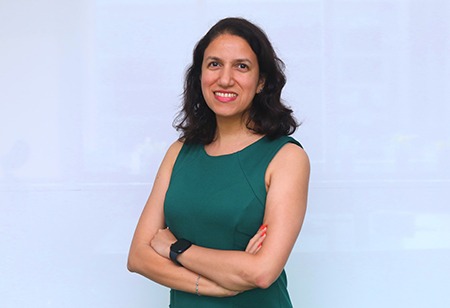
Irem Sayeed is a seasoned business leader with over 20 years of experience in the financial services industry, specializing in credit, lending, and risk management. She previously served as Vice President at Mswipe Technologies and has held significant roles at Care Health Insurance, Poonawalla Fincorp, Kotak Mahindra Bank, and GE Capital. Her experience across these organizations has helped her develop expertise in credit risk, product development, and strategic planning. At UGRO Capital, she contributes to strengthening risk management practices and supporting responsible growth in the MSME lending ecosystem.