
Market Impact: Boost to Banking Sector and MSMEs
The overall effect of IBC Reforms 2026 will have a positive influence on the Indian economy, especially on the banking and MSME sectors.
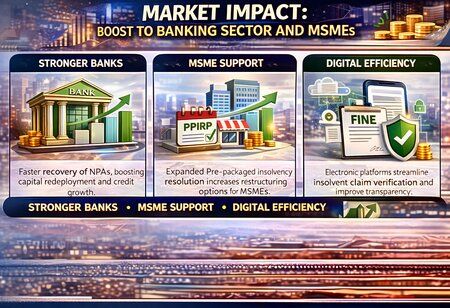
India’s gross non-performing asset (NPA) ratio has already dropped to multi-year lows, and the quicker insolvency resolution will probably enhance the quality of assets. Banks can redeploy capital more effectively by facilitating faster recovery of stressed assets, which helps in credit growth.
The reforms also increase access to Pre-packaged Insolvency Resolution Processes (PPIRP) not only to MSMEs but also to larger firms, which can access faster and more adaptable restructuring processes.
Another important area of focus is digital integration, where more and more services are based on electronic platforms and verified data records to simplify the process of claim verification and minimize disputes. This will improve transparency and efficiency in the insolvency ecosystem.
Also Read: Lok Sabha Clears Insolvency Law with New Amendments
Outlook: A Transformational Shift in India’s Insolvency Framework
The IBC Amendment Bill 2026 is a holistic reform of the insolvency regime in India, which will solve the key bottlenecks that have been a problem in timely resolution. The reforms will make the environment more efficient and investor-friendly by introducing strict timelines, enhancing the creditor rights, and adhering to international standards.
With India still on its path to becoming a USD 5 trillion economy, a well-developed insolvency system will be very instrumental in maintaining financial discipline and economic growth.
Nirmala Sitharaman said, “The objective of the amendments is to revive companies, not push them into liquidation”, emphasizing that the reforms are aimed at preserving enterprise value, protecting jobs, and ensuring viable businesses are given a fair opportunity to recover through a time-bound and efficient resolution process.
.jpg)