

How Consumer Healthcare CFOs Are Balancing Growth, Innovation & Cost Efficiency
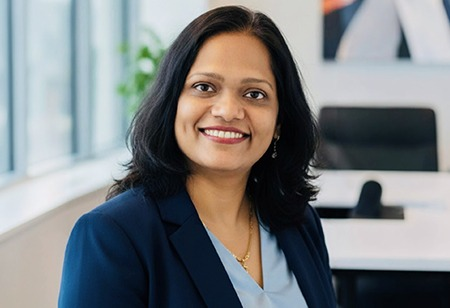
Niranjani C, CFO – India, South Asia, Kimberly-Clark
With 25 years of experience across leading organizations, including Unilever, Procter & Gamble, Nokia, Hershey and Kenvue, Niranjani C, CFO – India, South Asia, Kimberly-Clark, emphasizes that financial leadership must extend beyond profitability to become a key driver of sustainable business growth.
She believes that a CFO must balance growth ambitions with financial discipline, focusing not merely on controlling expenses but on identifying opportunities that create long-term value. Drawing from her experience in business transformations, she highlights the importance of making timely decisions, even with limited information, and building credibility with cross-functional teams to ensure effective financial decision-making.
On balancing immediate financial pressures with long-term priorities, Niranjani advocates protecting investments in core brands, innovation and organizational capabilities. Rather than cutting growth-oriented spending, CFOs should explore productivity improvements, procurement efficiencies, working capital optimization and trade-spend effectiveness.
She also observes that the CFO's role is evolving into that of a strategic business partner, particularly as consumer healthcare companies expand across e-commerce, quick commerce, modern trade and direct-to-consumer channels. This requires sharper capital allocation and channel-level profitability assessments.
Highlighting the potential of AI, automation and real-time analytics, she stresses the importance of strong data foundations for improving forecasting and business decisions. She concludes that future finance leaders must develop commercial understanding, AI literacy, risk anticipation, transformation capabilities and sound judgment to navigate increasingly complex business environments.
Driving Value Creation in Capital-Intensive Mining Businesses

Amit Gupta, Chief Financial Officer, Hindustan Zinc
With over two decades of finance leadership experience across mining, metals, aluminium, power, oil and gas, and manufacturing, Amit Gupta, Chief Financial Officer at Hindustan Zinc, highlights how capital-intensive mining businesses are redefining long-term value creation through disciplined capital allocation, operational excellence, technology adoption and sustainable practices.
He observes that the mining industry is shifting from a production-centric approach towards a value-driven business model, where success is measured not merely by production volumes or capacity expansion but by consistent returns, cash flow generation and capital productivity. He emphasizes maximizing existing assets through improved recovery rates, optimized mine planning, predictive maintenance and energy efficiency before committing substantial investments to new capacity.
Addressing commodity price volatility and rising operating costs, Amit advocates rigorous project evaluation, scenario planning, phased investments and maintaining strong balance sheets to preserve financial flexibility across market cycles. He also stresses the importance of measuring technology investments through clearly defined KPIs, pilot implementations and measurable business outcomes, ensuring that AI, automation, IoT and advanced analytics translate into tangible operational improvements.
On sustainability, he believes renewable energy, water conservation, decarbonization, responsible waste management and community development have become integral to business strategy rather than standalone ESG initiatives.
Looking ahead, Amit identifies the integration of technology, sustainability and operational excellence as the biggest drivers of mining industry growth. His leadership philosophy centres on purpose-driven decisions, data-backed insights, empowered teams, accountability, balanced risk-taking and integrity to deliver sustainable stakeholder value.