

How to Measure Hospital Financial Performance: KPIs CFOs Should Track
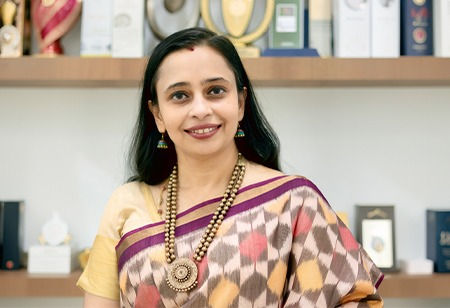
Sandhya Sriram, Group CFO, Narayana Health
With over two decades of experience across Narayana Health, Wipro and Hindustan Unilever, Sandhya Sriram, Group CFO of Narayana Health, highlights the importance of balancing financial sustainability with accessible and affordable patient care. She believes that effective hospital financial performance and management requires understanding the organization's purpose while ensuring disciplined capital allocation and operational efficiency.
Drawing from her cross-industry experience, she emphasizes that finance leaders must understand business models, identify value leakages and align financial decisions with organizational objectives. In healthcare, this also means recognizing the human impact behind every financial decision.
She identifies financial realization and cost management as two critical dimensions of hospital performance. Key indicators include average revenue per inpatient (ARPIP), average revenue per outpatient (ARPOP), variable and fixed costs, occupancy rates and average length of stay. While EBITDA reflects operating performance, she considers profit after tax (PAT) and cash flow essential measures of financial health, particularly given hospitals' substantial capital expenditure and asset replacement requirements.
She also advocates evaluating occupancy, revenue per bed and EBITDA collectively rather than independently, supported by benchmarks such as return on capital employed, receivable days, debt-servicing capacity and maintenance capital expenditure.
Looking ahead, Sandhya stresses disciplined capital allocation, granular costing, real-time analytics, stronger payor contracting and cash management. Her leadership philosophy centers on ethical execution, team empowerment, holistic decision-making and continuous improvement, encouraging emerging finance leaders to embrace technology, curiosity and long-term career development.
Working Capital Management in Cable Manufacturing: Growth to Cash Flow
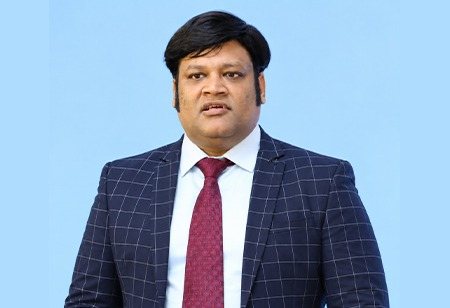
Gopal Agarwal, Chief Financial Officer, Universal Cables
Gopal Agarwal, Chief Financial Officer at Universal Cables, emphasizes that effective working capital management is essential for converting business growth into sustainable cash generation, particularly in the capital-intensive and cyclical cable manufacturing industry. Drawing from his experience across corporate finance and banking, he highlights the importance of balancing operational efficiency, liquidity and strategic growth.
He identifies inventory and receivables management as the primary levers for reducing the cash conversion cycle. By aligning procurement with production, minimizing work-in-progress holding periods and strengthening supply chain planning, manufacturers can significantly reduce inventory days. Similarly, optimizing customer credit periods and offering strategic cash discounts can accelerate collections and improve liquidity.
Addressing copper price volatility, he advocates appropriate hedging strategies for fixed-price contracts, including dynamic call and put options, to minimize the impact of metal price fluctuations on profitability.
He further stresses that CFOs must closely monitor daily cash flows, receivable days, liquidity ratios, profitability and debt-servicing obligations, while remaining involved in operational planning, particularly for large EPC projects. With growing electricity generation and transmission investments driving demand for cables, he believes manufacturers should prioritize operational improvements over expensive external financing to fund expansion.
Beyond EBITDA, Gopal highlights the importance of capital efficiency, timely machinery replacement and maintaining production performance. His leadership philosophy revolves around converting cash into cash as efficiently as possible, supported by three priorities: cash management, operational excellence and human capital development.