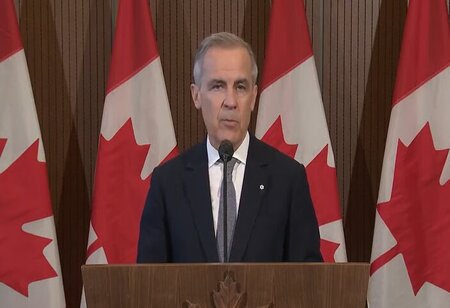
Canada’s Prime Minister Mark Carney is expected to travel to India in the first week of March 2026, marking a key moment in Ottawa’s efforts to strengthen and diversify trade ties with major global partners beyond its traditional reliance on the United States. The announcement, made by senior Indian and Canadian officials, underscores the growing importance both nations place on expanding economic cooperation and strategic engagement.
Key Highlights
- Canadian PM Mark Carney likely to visit India in March to strengthen bilateral trade cooperation.
- Visit underscores Canada’s push to diversify trade, focusing on energy, technology, and investment.
During the visit, Carney is anticipated to sign several high-level agreements with Indian counterparts across a range of priority areas, including uranium supply, energy, critical minerals, artificial intelligence (AI), and quantum computing. A proposed 10-year, C$2.8 billion uranium supply deal is likely to be a focal point of discussions, reflecting deepening collaboration in nuclear energy under existing cooperation frameworks.
Officials have also indicated that the visit will coincide with the launch of formal negotiations on a Comprehensive Economic Partnership Agreement (CEPA) between the two countries. This potential trade pact aims to broaden the scope of bilateral commerce to include goods, services, investment, and emerging sectors, and could significantly enhance two-way trade in the coming years.
Also Read: India & Canada Near $2.8 Bn Uranium Deal as Trade Talks Progress
The push for closer commercial engagement comes amid a broader pivot in Canada’s foreign economic policy, as Ottawa seeks to reduce dependence on the U.S. market and explore deeper ties with dynamic economies such as India’s. This strategy reflects global shifts in trade relationships and a mutual interest in building resilient, diversified supply chains.
The March visit is also seen as part of a reset in India–Canada diplomatic relations, which had experienced tensions in recent years. Multiple high-level exchanges and growing cooperation in trade, technology, and energy underscore a shared commitment to strengthening partnerships and capitalizing on economic opportunities in sectors of strategic importance.