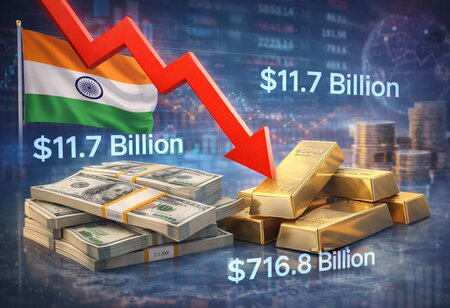
India’s foreign exchange reserves declined sharply by $11.7 billion to $716.8 billion during the week ended March 6, marking the largest weekly fall in over a year, according to data released by the Reserve Bank of India.
Key Highlights
- India’s forex reserves fell $11.7 billion to $716.8 billion during the week ended March 6.
- RBI dollar sales and valuation losses drove the sharpest weekly reserve decline in over a year.
The decline comes after the central bank intervened in the foreign exchange market by selling dollars to stabilize the Indian rupee, which has been under pressure due to global economic uncertainties and rising crude oil prices. Analysts estimate that the RBI conducted net dollar sales of about $6.1 billion, while the remaining drop was attributed to valuation losses caused by a stronger US dollar and rising global yields.
A major portion of the fall was driven by a decline in foreign currency assets, the largest component of the country’s forex reserves, which dropped by around $9.88 billion to $563.24 billion. In addition, gold reserves declined by about $1.61 billion to roughly $130 billion during the same period.
Also Read: India's Forex Reserves Surge to Record $723.8 Billion
The overall reserves had reached a record high of about $728.5 billion in the previous week, making the recent drop particularly notable despite remaining at historically strong levels.
Economists note that the central bank’s intervention reflects efforts to contain volatility in the rupee, which has weakened amid geopolitical tensions in the Middle East, higher oil prices, and strengthening US bond yields.
Despite the decline, India remains among the largest holders of foreign exchange reserves globally, providing a strong buffer against external shocks and ensuring adequate import coverage for several months.
Overall, while the drop highlights pressures in global currency markets, experts believe India’s reserve levels remain robust enough to support currency stability and manage short-term external risks.