
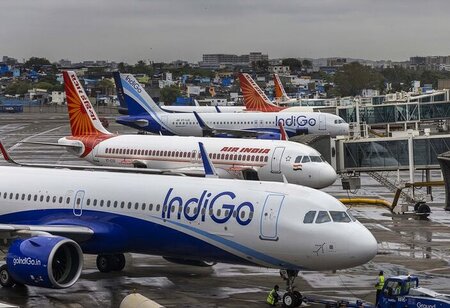
In a significant relief measure for India's aviation sector, the Union Cabinet has approved a one-time budgetary support package of Rs 10,000 crore to help airlines cope with soaring aviation turbine fuel (ATF) prices triggered by the ongoing conflict in West Asia.
Key Highlights
- Government approves Rs 10,000 crore fund to shield airlines from soaring aviation fuel costs.
- ATF prices surged 2.5 times amid West Asia conflict, pressuring airline profitability.
The financial assistance will be routed through state-run oil marketing companies (OMCs) under a dedicated price stabilisation fund aimed at cushioning airlines from sharp fuel cost increases and preventing a surge in airfares for passengers.
Union Petroleum and Natural Gas Minister Hardeep Singh Puri said the initiative is designed to stabilise ATF prices and ensure uninterrupted airline operations during a period of heightened geopolitical uncertainty.
"The fund will help stabilise ATF prices for scheduled Indian carriers and protect passengers from fare increases driven by geopolitical developments affecting global energy markets," the minister said.
Also Read: SriLankan Airlines & Axis Bank India Forge Strategic Partnership
ATF Prices Jump 2.5 Times Amid West Asia Crisis
The government's intervention comes after international ATF prices surged nearly 2.5 times, rising from Rs 60.5 per litre in March to Rs 142 per litre in May. Despite the sharp increase in global fuel costs, domestic ATF prices for scheduled airlines were raised by only 9% in April and have remained unchanged since then.
Officials noted that state-owned OMCs are currently facing under-recoveries of around Rs 30 per litre on ATF supplied to domestic airlines. To prevent a sudden spike in travel costs, the government has capped ATF prices at Rs 75.6 per litre for airlines.
The Cabinet stated that the support package will operate as a revolving fund. Once global fuel prices moderate, the differential amount will be recovered from OMCs and returned to the government exchequer.
Relief for Airlines as Fuel Costs Pressure Margins
The aviation industry has been grappling with rising operational costs as fuel remains the single largest expense for airlines. According to the government, ATF accounts for nearly 40% of airline operating costs and can rise to as much as 60% during periods of extreme fuel price volatility.
Industry experts believe the support package will provide critical breathing space to airlines. Sahil Mahajan, Partner for Aviation, Airports and Hospitality at PwC India, said the measure would help airlines manage margin pressures and offer greater pricing stability to consumers.
The scheme will be implemented through agreements between OMCs and participating airlines, requiring carriers to procure ATF exclusively from designated OMCs for up to three years or until the financial support is fully recovered.
The move comes at a crucial time for the aviation sector. Major carriers, including Air India, Air India Express and IndiGo, recently reduced around 250 domestic flights per day amid escalating fuel costs, raising concerns over capacity constraints and higher ticket prices.
While the Rs 10,000 crore support package is expected to provide immediate relief, industry experts maintain that long-term reforms in fuel taxation and ATF pricing mechanisms will be essential to ensure the sustainability and competitiveness of India's aviation sector.