
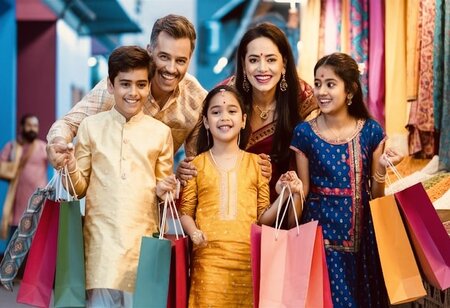
Great Indian Festival sales recorded a strong opening as the number of sellers generating more than Rs 1 crore in sales on Amazon during the first 24 hours increased over 80% year-on-year. Meanwhile, Flipkart witnessed more than six times its usual shopper traffic during the opening hour of its Big Billion Days sale, highlighting strong consumer demand for festive purchases. Discounts, free exchange offers and no cost equated monthly installments (EMIs) were the important factors that helped shoppers spend on higher value products.
Key Highlights
-
Amazon sellers crossing Rs 1 crore in Great Indian Festival opening-day sales which increased over 80% year-on-year, reflecting strong festive shopping demand.
-
Flipkart Big Billion Days sale recorded six times its usual opening-hour shoppers as no-cost EMIs and exchange offers encouraged higher-value purchases.
The opening day signifies the rising significance of shopping in India towards affordability in the festival season, with consumers sampling luxury products and upgrades in several product categories.
Amazon Great Indian Festival Sales Gain Momentum
The first round of Amazon's Great Indian Festival sale saw the firm record a huge spike in the performance of its sellers. More than 80% of the sellers sold over Rs 1 crore in its first 24 hours, compared to the previous year.
Amazon India Vice President Saurabh Srivastava also said that the e-commerce major has seen a record growth in its products ordered by 100%. The company credited the robust response to various factors, including savings programmes, instant bank discounts, exchange benefits, no-cost EMIs and Amazon Pay Later.
The findings highlight the significance of promotions to drive purchases in the festive season. The surge is good news for sellers as it can help them attract more customers, though it doesn't mean more profits once you factor in discounts, ad and fulfilment expenses.
Hero MotoCorp, Samsonite and Philips See Strong Demand
Several established brands recorded substantial growth during the opening phase of the festive sales. Sales of Samsonite's premium luggage business grew 200%, and Hero MotoCorp's two wheeler business increased by 30-fold. Philips also said sales of home appliances were 10 times higher.
The performance in these categories suggest a high level of interest in products other than those for regular consumption. Two-wheelers, top-tier bags and home appliances are all priorities but also can be more accessible by consumers during festive discounts and financing.
However, the reported growth rates reflect individual brand or category performance and should not be interpreted as equivalent increases in overall market sales. The underlying sales volumes, revenue contributions and profitability figures were not provided in the available information.
No-Cost EMI and Exchange Offers Drive Festive Purchases
Flexibility in payment was a major aspect of this year's festive shopping. Amazon Pay Later EMI transactions doubled and over one-third of its transactions were done using EMI, the company said.
Flipkart Big Billion Days sale found a similar pattern in online shopping as well: one-third of its customers opted for a no-cost EMI and one-quarter of them took advantage of exchange offers. These choices can have a big impact on the immediate costs of buying expensive products, such as smartphones and other electronics.
EMI schemes are ways in which buyers can pay for their purchase through a series of fixed repayments over a period of time for a vehicle that they are eligible for, with the corresponding terms and conditions. Exchange programmes can also limit the initial amount to be paid by swapping eligible old devices or products.
However, consumers should check out the actual amount to be paid, the fees for processing, the valuation of the exchanges and offer eligibility before buying the item. While financing can make deals more affordable, it does not necessarily make them cheaper.
Also Read: UPI Leads Festive Payments; Credit Cards Boost E-Commerce Edge
What the Festive Sale Performance Means for India's E-Commerce Market
Amazon and Flipkart have provided early results of the impact of festive shopping events, which have emerged as a key opportunity for brands and sellers to engage the market. In addition to the headline discounts, financing options, bank offers and exchange programmes are very influential in the purchasing choices.
These events can boost the visibility of their products and increase their customer base for sellers. But the return on investment comes into account with respect to profit margins, platform charges, promotional costs, returns, and inventory management.
Great Indian Festival and Big Billion Days sale can be a chance for consumers to compare prices and to buy products at potentially good rates. However, a rise in opening day traffic and sales is not a reliable measure of an overall rise in spending or a re-direction of buying from other times.
The key e-commerce platforms' performance during the festive season will provide additional insights into consumer demand, premium product adoption and how payment flexibility will help enhance the growth of online shopping in India.