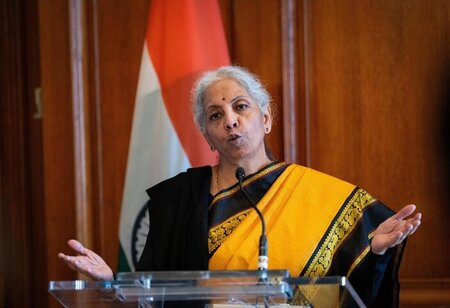
India's Consumption Growth could enter a new phase as rising wages and upward mobility encourage households to increase discretionary spending, FM Sitharaman said on Tuesday. Speaking at the All India Management Association’s 53rd National Management Convention, FM Sitharaman said India’s next consumption cycle would depend on more households moving into income brackets where discretionary expenditure accelerates.
Key Highlights
- India’s next consumption growth could depend on wage growth and upward mobility, FM Nirmala Sitharaman said.
- FM Sitharaman urged companies to look beyond urban premium consumers and address India’s broader consumption base.
Her comments come as private consumption remains a major component of India’s economy. Private consumption grew 7.7% in FY26, while India’s GDP also expanded 7.7% during the year, according to the figures cited by the Finance Minister.
Why Wage Growth Matters for India’s Next Consumption Cycle
Wage growth can play an important role in determining whether households have greater room for discretionary spending after meeting essential expenses.
FM Sitharaman said the next phase of consumption would be driven by upward mobility, with households moving into income brackets that have greater capacity to spend on non-essential goods and services.
This creates a potential shift in the composition of consumption. As disposable incomes rise, household spending can increasingly extend beyond basic necessities towards consumer durables, healthcare, personal wellness and quality services.
The Finance Minister linked this transition to the broader structural changes taking place in India's economy and household income patterns.
India’s Consumption Base Extends Beyond Urban Premium Consumers
FM Sitharaman also cautioned companies against building their consumption strategies exclusively around affluent urban consumers.
She said India's consumption base includes working families across agriculture, rural construction, transport and informal enterprises. Focusing only on premiumisation among urban consumers, she warned, could affect the durability of consumption-led growth.
For companies, this points to a wider opportunity across income groups and geographies rather than concentrating solely on premium products aimed at metropolitan consumers.
The rural and semi-urban markets therefore remain important to understanding India's next consumption phase, particularly as income levels and purchasing power evolve.
Also Read: India Plans Rs 350-Rs 450 National Floor Wage Amid Rising Labor Unrest
How Demographic Changes Could Reshape Consumer Spending
Changing demographics could also influence the composition of household expenditure.
According to FM Sitharaman, rising median age, lower youth dependency and greater longevity are expected to shift spending towards areas such as healthcare, personal wellness, consumer durables and quality services.
This demographic transition could change not only how much households spend but also where that spending is directed.
An ageing population, for instance, can create greater demand for healthcare and wellness-related services, while longer lifespans could influence household priorities and savings and consumption decisions.
India’s Private Consumption Remains a Key Growth Driver
Private consumption is one of the most important components of India's economic activity and accounted for more than half of GDP growth in FY26, according to the figures cited by the Finance Minister.
Private consumption grew 7.7% in FY26 after the government rationalised and reduced GST rates and exempted income up to Rs 12 lakh from income tax.
The combination of income growth, tax changes and evolving household preferences could influence consumption demand going forward. However, the extent to which stronger income growth translates into discretionary spending will depend on how broadly wage gains are distributed across India's workforce.
What Could Drive India’s Next Consumption Boom?
The next phase of consumption is likely to depend on more than premium urban demand. The ability of households across rural, semi-urban and urban markets to move into higher income brackets will be an important factor.
For businesses, this could require products and services that address different income segments rather than relying exclusively on premiumisation.
The sectors identified by FM Sitharaman, including healthcare, wellness, consumer durables and quality services, could see changing demand patterns as household incomes and demographics evolve.
Ultimately, wage growth and upward mobility will determine how much additional purchasing power reaches households and whether that translates into sustained discretionary consumption.