
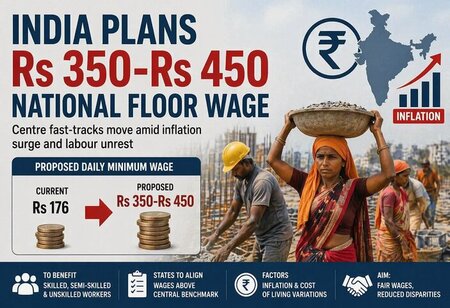
The Central government is fast-tracking the revision of India’s national floor wage, factoring in regional wage disparities, rising inflation, and growing labor unrest across key industrial hubs. The move comes as policymakers seek to balance worker welfare with economic competitiveness amid global uncertainties.
Key Highlights
- Centre plans major national floor wage hike to Rs 350-Rs450 amid rising inflation pressures.
- Labor unrest and regional disparities push government to revise minimum wage framework across states.
Officials indicate that the government is actively reviewing wage structures across states, including the National Capital Region (NCR), while assessing inflation trends driven by global factors such as the ongoing Iran conflict.
The objective is to introduce a revised, region-sensitive floor wage that reflects variations in living costs- covering essentials such as food, fuel, transport, and housing- without placing excessive pressure on businesses, particularly in economically weaker regions.
Proposed Wage Hike: What to Expect
According to reports, the Centre is considering increasing the national daily minimum wage to Rs 350-Rs 450, significantly higher than the current Rs 176 set in 2017. If implemented, this would effectively more than double the baseline wage, with monthly earnings calculated based on a 26-day working cycle.
The revised structure is expected to apply across categories including skilled, semi-skilled, and unskilled workers, with states required to align their minimum wage notifications above the central benchmark.
Labor Unrest Driving Urgency
The accelerated review follows recent wage protests in industrial regions such as Noida, Ghaziabad, and parts of Haryana. Several states have already responded with wage hikes:
- Uttar Pradesh increased minimum wages for unskilled workers in key NCR areas.
- Haryana implemented a sharp rise of nearly 35% in minimum wages.
- Other industrial states like Maharashtra, Karnataka, Gujarat, and Tamil Nadu are already near or above the proposed wage band.
These developments highlight increasing pressure on policymakers to standardise wages and address regional disparities.
Inflation Impact and Economic Context
Rising inflation has played a critical role in expediting the wage revision process. Retail inflation has edged higher in recent months, while wholesale inflation has reached multi-year highs, driven by elevated crude oil prices, energy costs, and supply chain disruptions linked to geopolitical tensions in West Asia.
Officials are incorporating these inflationary pressures into the wage framework to ensure that the revised floor wage reflects real purchasing power rather than nominal increases.
Implications for Businesses and Workers
Once implemented, the national floor wage will serve as a statutory benchmark, requiring all states to maintain minimum wages at or above the prescribed level. While states can set higher wages, they cannot go below the national floor.
For businesses, especially in labour-intensive sectors- this could lead to adjustments in wage structures, particularly for contract and informal workers. However, experts note that labor costs typically form a smaller share of overall production expenses, limiting the broader economic impact.
For workers, the move is expected to improve income stability and reduce interstate wage disparities. Labor groups have welcomed the initiative but are calling for transparent consultations before finalization.
Also Read: India's New Labor Codes 2026: Impact on Salary, PF, and Work Culture
The government is expected to roll out the revised national floor wage framework soon, likely introducing region-based bands to reflect economic diversity across states. As India navigates global economic headwinds and domestic labor challenges, the proposed wage reform could play a crucial role in ensuring equitable growth while maintaining industrial competitiveness.