
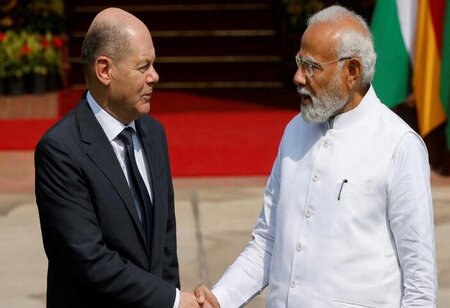
India and Germany have agreed to simplify processes governing defense trade and significantly strengthen their bilateral cooperation in defense, trade and technology, following high-level talks between Prime Minister Narendra Modi and German Chancellor Friedrich Merz during the latter’s official visit to India. The two leaders welcomed a series of agreements and declarations that signal a deepening strategic partnership between the world’s largest democracy and one of Europe’s leading economies.
Key Highlights
- India and Germany agree to simplify defence trade and strengthen industrial cooperation.
- PM Modi highlights growing strategic, trade, and technology partnership with Germany.
During discussions in Gandhinagar, Gujarat, both sides emphasised the importance of expanding collaboration across multiple sectors, including defense industrial cooperation, critical and emerging technologies, renewable energy, and mobility. Prime Minister Modi expressed his appreciation to Chancellor Merz for efforts to simplify defence trade procedures, which will help facilitate smoother exchanges of military equipment and promote joint production opportunities. Both leaders agreed to develop a Defence Industrial Cooperation Roadmap aimed at long-term partnerships that include co-development and co-production of defense platforms.
The two nations also signed a total of 19 bilateral agreements covering a broad range of areas, such as semiconductors, critical minerals, and visa arrangements — including visa-free airport transit for Indian passport holders in Germany.
Also Read: India-Oman Trade Deal to Take Effect in Three Months
Modi highlighted that bilateral trade in goods and services has surpassed $50 billion, a record level, underlining the robust economic ties between India and Germany. Both leaders reiterated their support for concluding the long-pending India–EU Free Trade Agreement, which they believe could further unlock economic potential and diversify trade partnerships.
In addition to economic cooperation, India and Germany reaffirmed their shared commitment to global peace and security. They jointly condemned terrorism and expressed readiness to strengthen cooperation against violent extremism. The leaders also underscored the importance of sustainable development, innovation, and people-to-people exchanges in shaping the future of bilateral ties.
.jpg)