
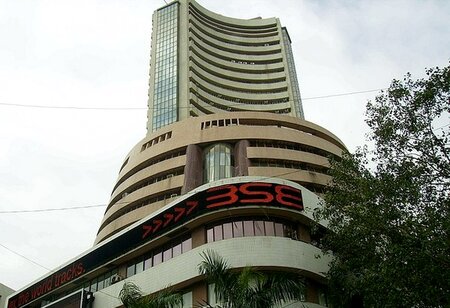
After Taiwan, India has lost its position as the world’s sixth-largest equity market to South Korea, as an AI-driven rally in semiconductor and technology stocks propelled the Korean market’s capitalization past India.
Key Highlights
- South Korea overtook India in market capitalization, driven by AI-led semiconductor stock rally growth.
- Despite ranking decline, India remains among world's fastest-growing major economies with strong fundamentals.
According to Bloomberg data, the total market capitalization of South Korean-listed companies has surged to nearly $5 trillion, surpassing India's market value of approximately $4.8 trillion. The rally has been largely fueled by semiconductor giants Samsung Electronics and SK Hynix, which have emerged as key beneficiaries of the global AI boom.
While the development marks a shift in global equity rankings, analysts believe it does little to alter India's long-term economic fundamentals, which continue to remain among the strongest globally.
AI Boom Reshapes Global Market Rankings
The rapid rise of South Korea and Taiwan in global equity rankings reflects growing investor appetite for semiconductor and AI-related companies. As demand for advanced chips continues to surge worldwide, investors have increasingly concentrated capital in markets that dominate the global semiconductor supply chain.
South Korea's market rally has also been supported by ongoing corporate governance reforms and investor-friendly measures aimed at enhancing shareholder value.
However, market experts note that the gains have been heavily concentrated in a handful of technology companies, making the rally highly dependent on the sustainability of the current AI investment cycle.
Why India's Market Capitalization Declined
India's stock market has faced several short-term headwinds in 2026, including foreign portfolio investor (FPI) outflows, a weakening rupee, rising energy costs, and concerns over inflation.
Global investors have reportedly pulled billions of dollars from Indian equities this year as they shifted capital toward markets offering direct exposure to the AI infrastructure boom. Unlike South Korea and Taiwan, India currently lacks large publicly listed companies that are major suppliers to the global semiconductor ecosystem.
The benchmark Indian equity indices have also witnessed pressure after years of sustained gains, contributing to the decline in overall market capitalization.
India's Economic Fundamentals Remain Strong
Despite the temporary setback in market rankings, India's broader economic story remains intact. According to International Monetary Fund estimates, India's economy is valued at more than $4 trillion and continues to be one of the fastest-growing major economies in the world.
Also Read: IMF Revises India's GDP Growth Projection to 6.5% for FY27
The country benefits from strong domestic consumption, a young workforce, expanding digital infrastructure, rising manufacturing investments, and government-led initiatives such as Make in India, Production-Linked Incentive (PLI) schemes, and semiconductor manufacturing programs.
Analysts believe India's long-term growth trajectory will continue to be driven by rising incomes, urbanization, infrastructure development, and increasing formalization of the economy.
Recent Report
Earlier, India slipped from fifth to sixth place among the world’s largest equity markets after Taiwan’s market capitalization climbed to $4.95 trillion, surpassing India’s $4.92 trillion. The decline was driven by nearly $24 billion in foreign investor outflows, elevated market valuations, slower corporate earnings growth, and rising inflation concerns.
In contrast, Taiwan benefited from the global AI boom, led by semiconductor giant TSMC, whose strong rally boosted the country's market value. Despite the ranking setback, India continues to remain one of the world’s fastest-growing major economies, with analysts maintaining that strong economic fundamentals, manufacturing expansion, and policy reforms could help the country regain its position in the coming years.