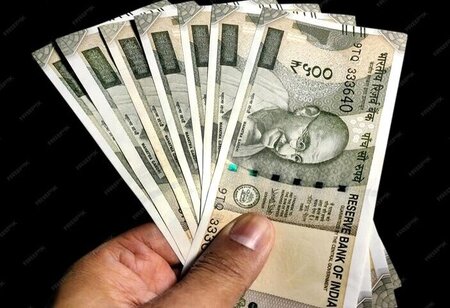
The Indian rupee becomes the weakest-performing currency in Asia, as it continues to go under pressure from rising crude oil prices and geopolitical tensions. The sharp decline highlights how the rupee currency in Asia trend is being driven by sustained foreign investor outflows, a strong US dollar, and India’s heavy dependence on oil imports.
Key Highlights
- Indian rupee becomes Asia’s weakest currency amid rising oil prices, foreign outflows, and global tensions.
- Rupee hits record lows against dollar, raising concerns over inflation, imports, and economic stability.
The currency recently hit a record low beyond 95 per US dollar, reflecting mounting macroeconomic stress. Analysts note that the rupee has fallen over 4% in March 2026, marking its worst monthly performance in more than seven years.
According to the Economic Survey, the rupee had already been among Asia’s weakest currencies in 2025 due to geopolitical pressures and trade imbalances. Rising oil prices remain a key concern, as India imports nearly 85–90% of its crude requirements, making the currency highly vulnerable to global energy shocks.
What Changed: From Stability to Sharp Decline
For several years prior to 2024–25, the rupee remained relatively stable, trading in a narrow band of Rs 80–84 per dollar, supported by strong forex reserves and active intervention by the Reserve Bank of India (RBI).
However, the trend began to shift in 2025 when global uncertainties intensified. The rupee breached the Rs 90 mark for the first time in late 2025, and depreciation pressures accelerated into 2026.
Analysts note that unlike earlier cycles driven by temporary shocks, the current weakness reflects structural pressures, including a widening trade deficit, rising energy import costs, and shifting global capital flows.
Key Drivers Behind the Rupee’s Fall
1. Surging Crude Oil Prices
India imports nearly 85–90% of its crude oil, making the rupee highly sensitive to global energy shocks. With oil prices crossing $115 per barrel amid Middle East tensions, the import bill has surged, increasing demand for dollars and weakening the rupee.
2. Foreign Investor Outflows
Foreign portfolio investors (FPIs) have pulled out billions from Indian markets. In FY26 alone, over $19 billion in equity outflows has significantly reduced dollar inflows, putting downward pressure on the currency.
3. Strong US Dollar
Higher US interest rates and global uncertainty have strengthened the dollar, attracting capital away from emerging markets like India.
4. Geopolitical Tensions
The ongoing US-Iran conflict and risks around key oil routes such as the Strait of Hormuz have amplified volatility across global markets, directly impacting currency stability.
Also Read: Oil Impact on India Deepens as Crude Crosses $116, Markets Tumble
Expert Views: “Perfect Storm” for the Rupee
Market experts believe the rupee is currently facing a convergence of multiple negative factors.
According to a market expert cited in analysis, "the currency is caught in a perfect storm of high oil prices and foreign outflows, though domestic fundamentals still offer some support."
Anindya Banerjee of Kotak Securities warned, "The rupee is on a “bruising ride” with severe medium-term pressure, and could even witness sharp volatility phases ahead."
Meanwhile, economist Gaura Sengupta highlighted, "Allowing gradual depreciation may be a strategic move. Preserving forex reserves is crucial during prolonged global shocks."
Outlook: More Volatility Ahead?
Experts warn that the rupee could remain under pressure in the near term if:
- Oil prices stay elevated
- Foreign outflows continue
- Global uncertainty persists
Some analysts even caution that under extreme scenarios, the rupee could approach the 100 per dollar level, though this is not yet the base case.
The Indian rupee’s fall to become Asia’s weakest-performing currency reflects a complex mix of global shocks and structural vulnerabilities. While policy measures and RBI interventions may stabilise short-term volatility, the broader trajectory will depend on oil prices, capital flows, and geopolitical developments.
For now, the Indian rupee remains a key barometer of India’s exposure to global economic shifts- one that markets will watch closely in the months ahead.