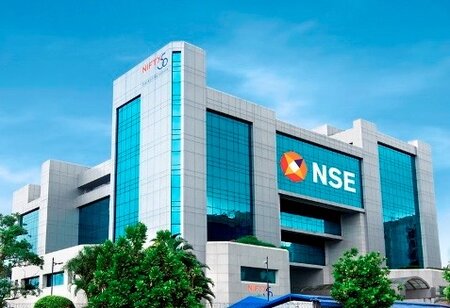
The highly anticipated NSE IPO is generating strong buzz in the grey market ahead of its expected stock-market debut later this month. According to IPO Watch, the NSE IPO GMP - grey market premium - stood at Rs 285 on Monday, up Rs 85 from Rs 200 a day earlier.
Key Highlights
- NSE IPO GMP surged to Rs 285, with the exchange targeting a Rs 30,000 crore issue around September 25.
- NSE expanded its permitted-to-trade list by 250 securities, with 106 seeing a four-fold turnover jump.
The NSE IPO is likely to hit Dalal Street in the fourth week of September, with the exchange targeting a listing around September 25, according to reports. The exchange is expected to announce the price band next week, while the IPO could open for subscription around September 15.
NSE Targets Rs 30,000 Crore in India's Potentially Largest-Ever IPO
NSE is reportedly looking to raise around Rs 30,000 crore at an estimated price band of Rs 1,800-1,900 per share, implying a valuation of about Rs 5 lakh crore. If completed as planned, the issue could become India's largest-ever IPO. The shares are expected to be listed on the BSE.
At the current GMP, investors could potentially see a listing premium of around 15% if the shares are priced near the upper end of the expected price band. However, grey market premiums remain unofficial and can change sharply before listing.
The Securities and Exchange Board of India (SEBI) gave its approval for the proposed IPO on September 4, clearing a key regulatory hurdle nearly a decade after NSE's earlier listing plans were put on hold. NSE had filed its draft red herring prospectus (DRHP) with SEBI in June and received the regulator's final observations on September 4. The exchange has yet to formally announce the IPO size, price band, subscription dates and other issue details.
Also Read: NSE Files DRHP for Rs 30,000 Crore IPO After Nearly a Decade
IPO Structure: Entirely an Offer for Sale
The proposed IPO will be entirely an offer for sale (OFS), with existing shareholders offering up to 14.89 crore equity shares, representing nearly 6% of NSE's equity, according to the DRHP.
State Bank of India (SBI) is expected to be the largest selling shareholder, offering up to 2.48 crore shares. Mauritius-based MS Strategic plans to sell around 1.6 crore shares, while Canada Pension Plan Investment Board (CPPIB) will offload nearly 1.19 crore shares. Aranda Investments, Bank of Baroda and Stock Holding Corporation of India are also expected to participate in the OFS, while LIC, one of NSE's largest shareholders, has opted not to sell shares in the IPO.
According to the DRHP, 50% of the net offer is reserved for qualified institutional buyers (QIBs), 15% for non-institutional investors (NIIs) and 35% for retail investors. Up to 5% of NSE's post-offer paid-up equity share capital has also been reserved for eligible employees.
NSE Expands 'Permitted to Trade' Universe Ahead of Listing
Separately, NSE has significantly expanded its "permitted to trade" (PTT) universe this year, adding 250 securities to a segment that had seen little activity in recent years. The expansion comes as NSE moves closer to its long-awaited listing and considers whether its own shares could eventually trade on its own platform.
NSE added 106 securities with effect from April 20, followed by another 144 from August 17 - marking its first such addition since 2022. By comparison, BSE currently has 30 companies under its own permitted-to-trade category.
The first batch of newly admitted securities has already seen a sharp increase in trading activity, with average daily turnover rising from about Rs 92 crore on the BSE to around Rs 400 crore across the NSE and BSE combined, after the securities became available for trading on both exchanges. Notably, 106 of the first 250 securities admitted saw a four-fold jump in turnover following their NSE admission.
Strong Investor Interest Expected
The NSE IPO is expected to attract significant investor interest given its dominant position in India's equity and derivatives markets, and the long-awaited opportunity for investors to finally own shares in the exchange itself.