
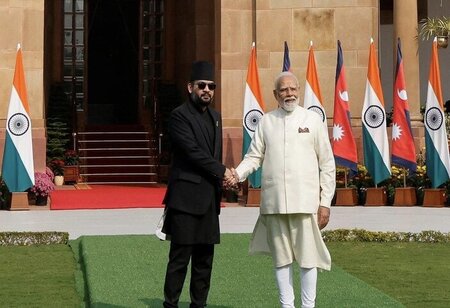
PM Narendra Modi and Balen Shah sign eight deals in critical areas, as India extends Rs 15,000 crore line of credit for Nepal. The Package of Development Cooperation was announced by PM Narendra Modi for supporting the recovery and reconstruction process in Nepal. The support will be used to aid reconstruction of infrastructure, rebuilding of communities and livelihoods of those impacted by the floods.
Key Highlights
- India announced about Rs 15,000 crores as its assistance to Nepal flood recovery/reconstruction activities.
-
Eight agreements cover civil service training, space research, healthcare, urban development and traditional medicine.
Prime Minister Narendra Modi conveyed condolences for loss of lives in the calamity and India's commitment to support Nepal at times of difficulties. The flash floods on August 26 reportedly left more than 5,200 people unaccounted for and killed 1,500.
PM Narendra Modi also spoke highly of Balen Shah's vision for the development of Nepal during his first bilateral visit to India since taking office. The letter of the mandate that he received from the 35-year-old leader was "historical," and it was in keeping with the aspirations and hopes of the younger generation of Nepal, he said.
PM Narendra Modi pointed out that the two nations, India and Nepal share common goals and concerns and are bound by mutual trust and friendship.
Eight MoUs Signed Across Key Sectors
India and Nepal signed eight memoranda of understanding to expand cooperation across several areas. The agreements cover:
-
Civil service capacity-building and training
-
Space research
-
Health and medicine
-
Urban development
-
Ayurveda and traditional medicine
The two leaders also jointly inaugurated key connectivity and energy projects and laid the foundation stones for new initiatives. These developments are expected to strengthen cooperation between the neighbouring countries.
PM Modi Reaffirms India's Support for Nepal's Essential Supplies
PM Modi emphasised India's position as a trustworthy petroleum products provider and supplier of other essential commodities to Nepal.
Despite the difficulties in oil supplies, he stated that India had not cut down the supply of fuel, fertilisers and essential items throughout the year. The commitment is in line with the country's Neighbourhood First Policy, he added.
The fuel dependency of Nepal is still a significant issue in the economic relationship between the two countries.
Balendra Shah Thanks India and Invites Modi to Nepal
In the joint address, Balendra Shah expressed his gratitude to India for its hospitality and support during the hard times, especially after natural calamities. He termed the relationship of both nations as a close relationship of trust, cooperation and solidarity.
Balen Shah also extended an invitation to PM Narendra Modi to visit Nepal to boost bilateral ties.
He added that India had always been an able neighbour and first responder in the times of natural disaster or any other challenging situation.
Also Read: PM Modi Hails Banking Reforms as RBI Inaugurates Rs 169-Cr Facilities
India-Nepal Ties Amid Regional Geopolitical Competition
India and Nepal have an open border, which means that the citizens of both countries can cross the border without passports or visas. They have a long history of cultural, economic and people-to-people ties.
But the relationship between the two nations has been marred by issues, such as territorial claims and claims of political interference. Concurrently, China continues to ramp up its presence in Nepal with investments in infrastructure such as airports, roads and hydropower facilities.
However, Nepal is heavily relying on India for fuel and other necessities even with the increased involvement of China. Energy cooperation is also becoming more mutual and bilateral with India importing about 1200 MW of power from Nepal.
The recent meeting, development assistance package and eight agreements are further indications of the growing cooperation between the two neighbours in various fields of infrastructure, energy, healthcare and others.