
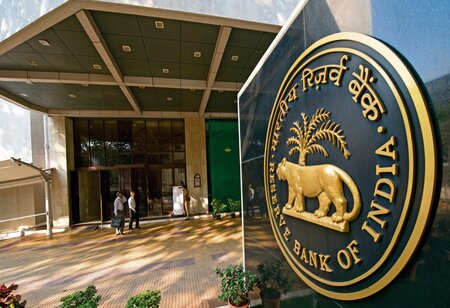
The Reserve Bank of India (RBI) on April 10 conducted a 7-day Rs 2 Lakh Crore VRRR auction to Absorb Surplus Liquidity to absorb excess liquidity from the banking system. The move comes amid rising surplus liquidity levels that have significantly impacted short-term interest rates.
Key Highlights
- RBI absorbs Rs 2 lakh crore VRRR auction to tighten surplus liquidity conditions.
- Strong bid demand and rising yields signal RBI’s proactive liquidity management and rate alignment efforts.
According to the RBI’s official release, the auction received bids totaling Rs 2,09,460 crore, out of which Rs 2,00,041 crore was accepted. The cut-off rate was fixed at 5.24%, while the weighted average rate stood at 5.23%.
A Variable Rate Reverse Repo (VRRR) auction is a key liquidity management tool used by the RBI to absorb surplus funds from banks for a short duration. It helps in aligning short-term money market rates with the policy repo rate, ensuring effective transmission of monetary policy.
The latest operation reflects the central bank’s intent to tighten liquidity conditions and bring stability to the financial system.
Surplus liquidity hits near four-year high
India’s banking system is currently witnessing excess liquidity estimated at around Rs 4.5 lakh crore, marking a near four-year high. This surge in liquidity had pushed short-term borrowing rates below the policy repo rate, weakening monetary policy transmission.
To address this imbalance, the RBI has stepped in with a large-scale Rs 2 lakh crore liquidity absorption operation, signaling a more proactive stance.
Also Read: RBI Proposes One Hour Delay on Digital Payments Above Rs 10,000
Impact on bond yields and money markets
The RBI’s VRRR auction had an immediate impact on financial markets:
- The 10-year government bond yield rose by 3–5 basis points, nearing the 7% level
- Swap rates also moved higher, reflecting expectations of tighter liquidity conditions
- Short-term rates are expected to gradually align with the policy corridor
This indicates that the market is reacting to reduced surplus liquidity and tighter financial conditions.
Why RBI is using short-term liquidity tools
The RBI has increasingly relied on short-duration liquidity instruments like 7-day VRRR auctions to manage evolving market conditions. This flexible approach allows the central bank to:
- Quickly absorb excess liquidity
- Maintain control over overnight rates
- Improve transmission of monetary policy
Analysts believe such measures will help re-anchor short-term rates closer to the repo rate, ensuring stability in the banking system.