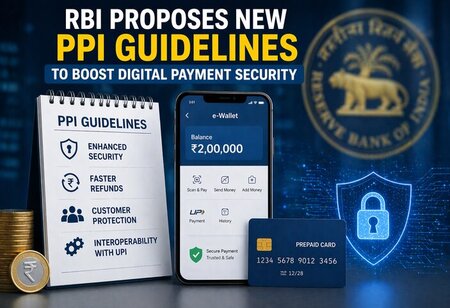
The Reserve Bank of India (RBI) has proposed new PPI guidelines as part of a comprehensive overhaul of prepaid payment instrument regulations, aimed at enhancing transaction security, strengthening customer protection, and supporting the long-term growth of India’s digital payments ecosystem.
Key Highlights
- RBI proposes Rs 2 lakh wallet cap, stronger refund and security norms for PPIs.
- The new PPI guidelines aim to boost digital payments growth with better consumer protection.
PPIs-commonly used as digital wallets or prepaid cards-allow users to load money in advance for transactions. The RBI has undertaken a detailed review of existing guidelines and released a draft Master Direction, inviting public feedback until May 22, 2026.
Under the proposed new PPI guidelines, both banks and authorised non-bank entities will be allowed to issue PPIs, subject to regulatory conditions. Non-bank issuers must maintain a minimum net worth of Rs 5 crore, which must increase to Rs 15 crore within three years of authorization.
Limits, Usage and Access
The RBI has proposed a cap of Rs 2 lakh on outstanding balances in general-purpose PPIs, while monthly cash loading is limited to Rs 10,000. Gift PPIs will have a maximum value of Rs 10,000, and transit PPIs Rs 3,000.
In a move to expand digital payments access, the central bank has also proposed allowing foreign nationals and NRIs to use PPI wallets during their stay in India, with monthly usage capped at Rs 5 lakh.
Also Read: SEBI Proposal to Allow Investors to Gift Mutual Funds via PPIs
Focus on Refunds, Security and Interoperability
The draft guidelines emphasise faster refunds, stating that failed or cancelled transactions must be credited back to the respective PPI immediately even if this temporarily exceeds prescribed limits.
The RBI has also proposed mandatory interoperability for full-KYC PPIs via card networks or Unified Payments Interface (UPI), enabling seamless transactions across platforms.
Additionally, issuers will be required to clearly disclose all charges, terms, and conditions in simple language, while strengthening grievance redressal systems and limiting customer liability in cases of unauthorized transactions.
The central bank said the reforms are aimed at creating a more secure, transparent, and scalable ecosystem for PPIs, reflecting the rapid adoption of digital payments in India. The proposed framework is expected to impact fintech companies, banks, and consumers alike, as regulators seek to balance innovation with robust safeguards in the evolving digital payments landscape.